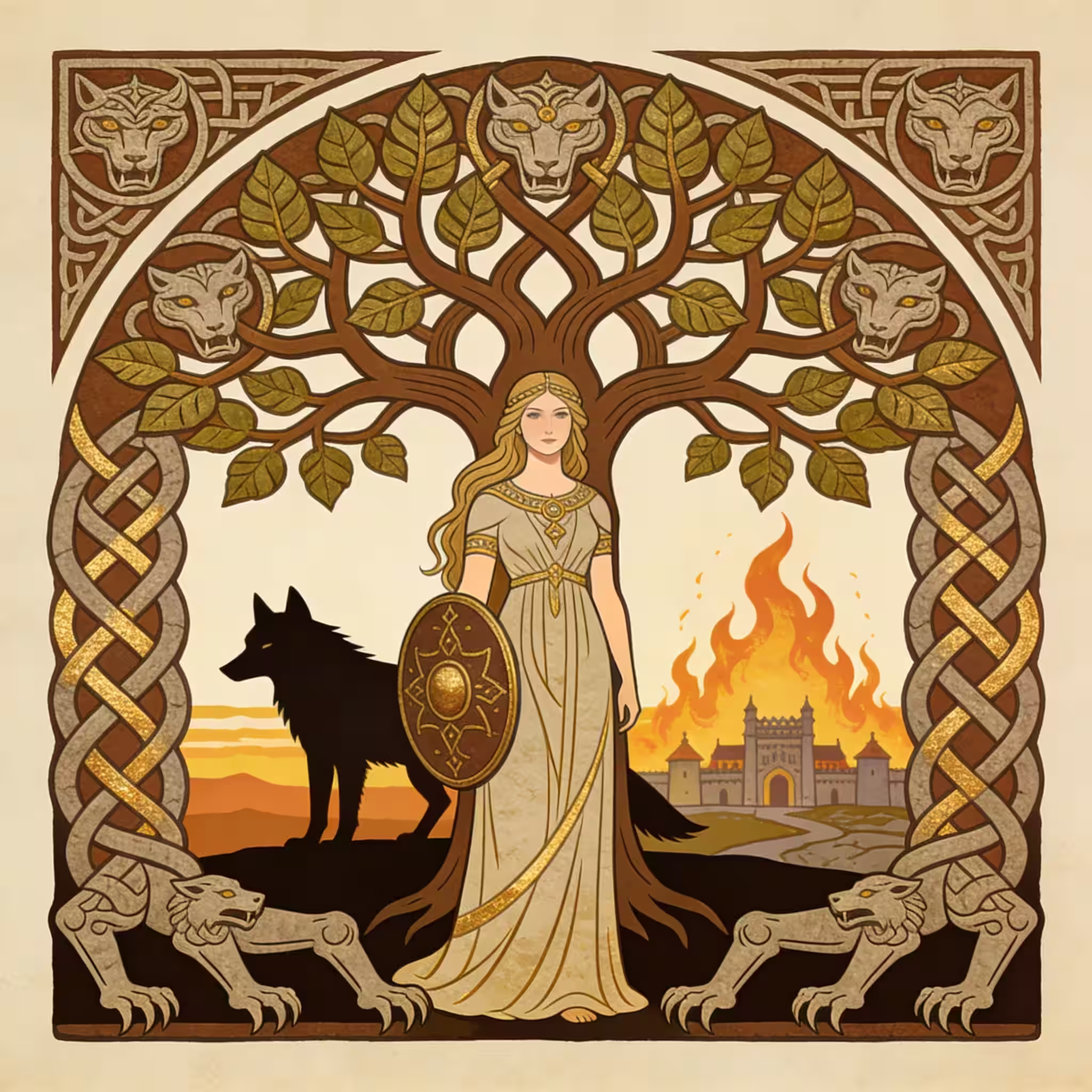
Imagine a time when the clouds over Åsgard trembled with prophecies of the end of the world. Ragnarok approaches, the Fenris wolf breaks its chains, Surtr swings his flaming sword – and in the midst of the chaos two goddesses appear in Völuspá's verses: Hlín and Frigg. Their grief, their loss, marks the moment when the sky cracks. But who really is this Hlín? Is she merely another name for Frigg, the queen at Odin's side, or an independent power – a protectress with roots in ancient trees and Germanic mothers?
The double grief
Völuspá, the mighty poem about the course of the world from creation to doom, gives us a glimpse of Hlín in stanza 53:
«Kømr Hlínar harmr annarr fram,
er Óðinn ferr við úlfa vega,
en bani Belja, biartr, at Surti;
mun Friggs angan falla.» (Neckel & Kuhn 1962: 12)
«Then comes Hlín's second grief, when Odin goes against the wolf to battle, Beli's slayer, the shining one, against Surtr; then Frigg's beloved falls.»
Here Hlín and Frigg stand as two names, two fates. The second grief is Odin's death against Fenrir. The first? Baldur's fall, the tragic fate of Frigg's son, which shakes all of Åsgard. The Prose Edda confirms: They are not one and the same. In Gylfaginning we read:
«Tólfta Hlín, hon er sett til gæzlu yfir þeim mönnum er Frigg vill frelsa frá hættu nokkrum. Þá af er þat orðtak, at sá er forðask hleinar.» (Faulkes 2005: 30–31)
Hlín guards those Frigg wants to save. «The one who escapes finds hlein» – shelter, protection. Yet she fails. Tragic irony: The protectress who cannot save Baldur or Odin.
Many translators merge them – Jackson Crawford writes outright «Frigg», Ursula Dronke sees poetic play. But Hopkins shows: The Edda's lists in Skáldskaparmál distinguish them clearly. Hlín is an ásynja among many, not Frigg's alter ego.
Shelter, maple or warmth?
Hlín. What hides behind the name? The Prose Edda points to «hleina» – to lean, seek shelter, perhaps from Old English «hlinian». But Jacob Grimm digs deeper in Deutsche Mythologie:
«Hlín is evidently named after our leinbaum, leinahorn, lenne, lønn (maple).» (Grimm 1883: 884)
The maple tree, rare in Old Norse as «hlynr», but alive in folk belief. Trees such as hazel and juniper became goddesses: Frau Hasel, Frau Elhorn. Hlín as a tree spirit? It echoes the rowan's role as «Þórs björg» – Thor's salvation in a flood, linked to the Sami Ravdna, Sif's Sami sister with holy berries. (Turville-Petre 1975: 98)
Another clue: «Hlyn» as warmth, «at hlyna» – a mild force. (Thorpe 1851: 168) In our shamanic point of view: Hlín as a nature spirit, protector against danger – a noaide's ally in journeys between worlds. This is interpretation, not fact; no sources bind her directly to Sami tradition, but the parallels tempt.
Sisters and servants
Hlín does not stand alone. The Edda's goddess lists mention her alongside Fulla, Lofn, Sjöfn. Fulla carries Frigg's treasure chest – a handmaiden, but a goddess in her own right. See the Merseburg charm, older High German magic:
Frija and Volla (Fulla) as sisters heal Phol's horse with Wuodan. Equals, not subordinates. Perhaps an older layer, where Hlín too was Frigg's sister before the hierarchy came? (Frog 2010)
This recalls the Germanic matrons – mothers with fruit, children, serpents on reliefs. They guard the family, as Hlín guards Frigg's chosen ones. Their cult lives on in the dísir and the norns. (Simek 2007: 274)
A protectress's fall
Back to Völuspá. Hlín's grievings are missteps: She cannot stop the arrow against Baldr, nor Odin's meeting with Fenrir. Imagine her in Åsgard's halls, arms outstretched – but fate sails past. Frigg's knowledge contrasts with Hlín's action. In neopaganism she is honored today as a guardian, especially in Iceland as a given name.
Lines to shamanism: Trees as guardians
The rowan myth crosses over to the Sami: Horagalles (Þórr) and Ravdna. In the world of the noaides, Hlín could be a «gæzla» – a protector in the upper world. We interpret: Rituals with maple leaves or rowan berries could summon her in our ceremonies – a fusion that enriches practice, but deviates from history.
A forgotten key
Hopkins challenges the «great goddess» idea. Hlín is one of many – tree, protector, mother. She lives in kennings and folk belief. Call on her beneath a tree: Perhaps you will find Hlín.
Sources
Hopkins, J.S. Goddesses Unknown III
Faulkes, A. (2005). Edda.
Grimm, J. (1883). Teutonic Mythology.
Simek, R. (2007). Dictionary of Northern Mythology.
-1.avif)
-1.avif)
%2520(1)-1.avif)