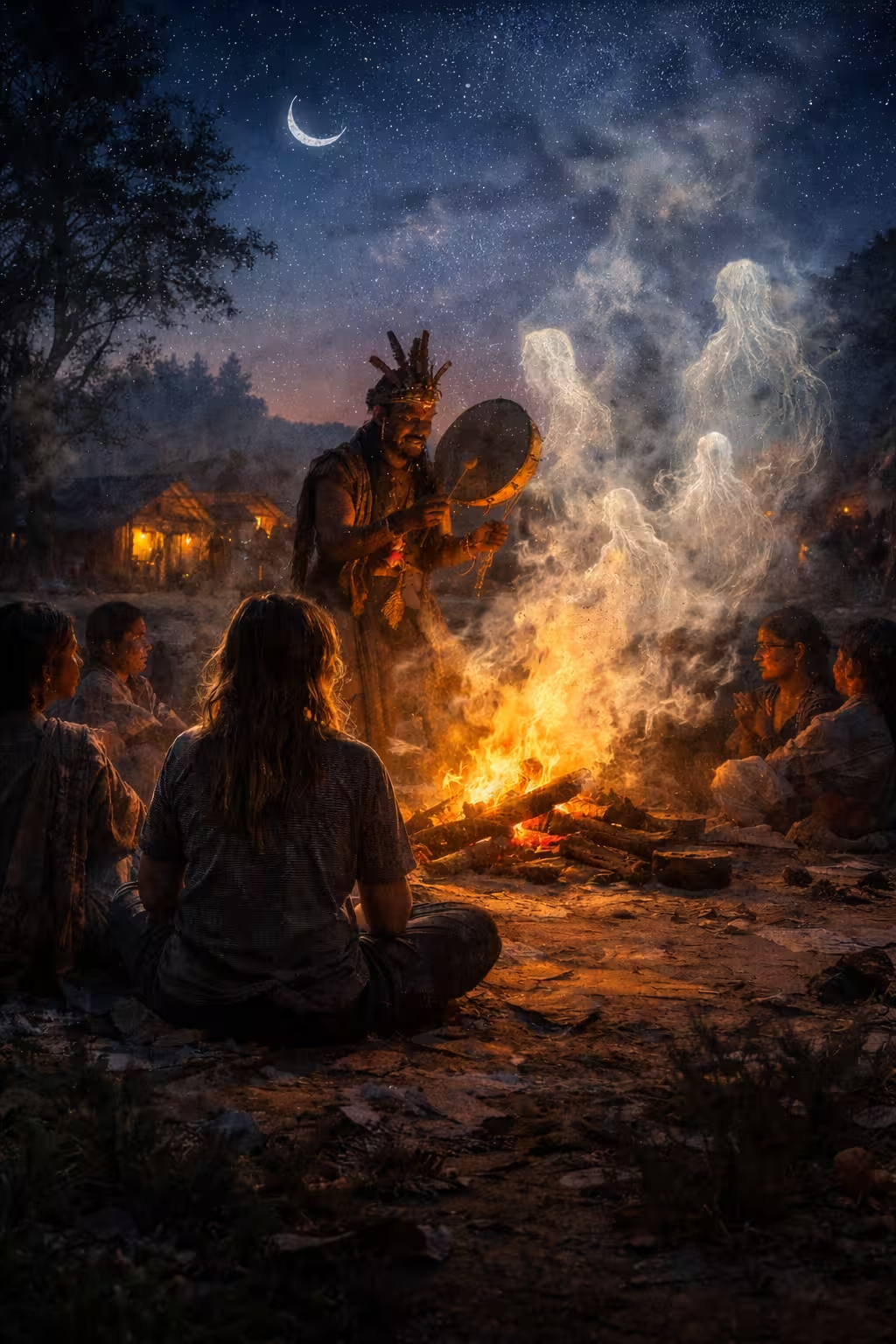
Picture this: A person sits quietly by a fire. The drums beat slowly. The rhythm is simple, but it takes hold of the body. Something is happening. Not on the outside – but within. Between breath and stillness, another reality opens up. A reality where nature listens, spirits answer, and healing begins.
This is the landscape of shamanism.
But what is shamanism, really? Is it old rituals from distant cultures? Is it healing, drum journeys and spirit contact? Or is it something far more fundamental – something human?
A word with many stories
The word “shamanism” has a complicated background. It was first used by Western researchers who tried to understand spiritual traditions outside Christianity. They looked at ecstatic rituals, trance, healing and spirit contact – and gave it all one name: shamanism.
But shamanism is not just one religion. Nor is it just one method. It is a diversity of traditions that exist – or have existed – all over the world: in Siberia, the Americas, Africa, Asia and also in the Nordic countries.
Common to them all is this: The shaman is a bridge-builder. Between humans and nature. Between the visible and the invisible. Between that which is out of balance – and that which can be healed.
The shaman – mad, brilliant or both?
For a long time researchers held that shamans were “possessed”, “mad” or primitive. But gradually the picture began to change. Modern research shows that shamans do not lose control in trance – they have control. They move in and out of altered states of consciousness deliberately.
It is not about fleeing from reality. It is about meeting it on a deeper level.
In many cultures the shaman is the one you go to when life hurts. When illness, grief, trauma or crisis strike. The shaman heals not only the body – but also the story, the relationships and the connection to something greater.
A living practice – also today
In our modern world, full of stress, screens and pace, there are many who feel a longing. A longing for meaning. For belonging. For contact with nature – and with oneself.
That is why many young people today turn their gaze towards shamanism. Not as a trend, but as a path. A practice that reminds us that we are more than thoughts and achievements. That the body knows. That nature speaks. That stillness can be just as powerful as words.
Shamanism is not about uncritically copying old rituals. It is about respect. About listening. About finding a form that is honest, down-to-earth and rooted in both tradition and the present.
An invitation
Shamanism does not give ready-made answers. It asks better questions.
What does wholeness mean to you? What happens when you truly listen – to the body, to nature, to dreams? What can be healed when we dare to go slower?
This is not a path for the chosen few. It is a path for human beings. Just like you.
Welcome in. 🌿
-1.avif)
-1.avif)