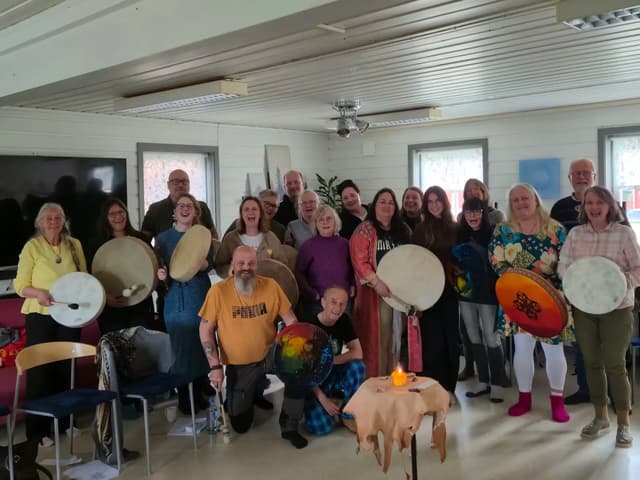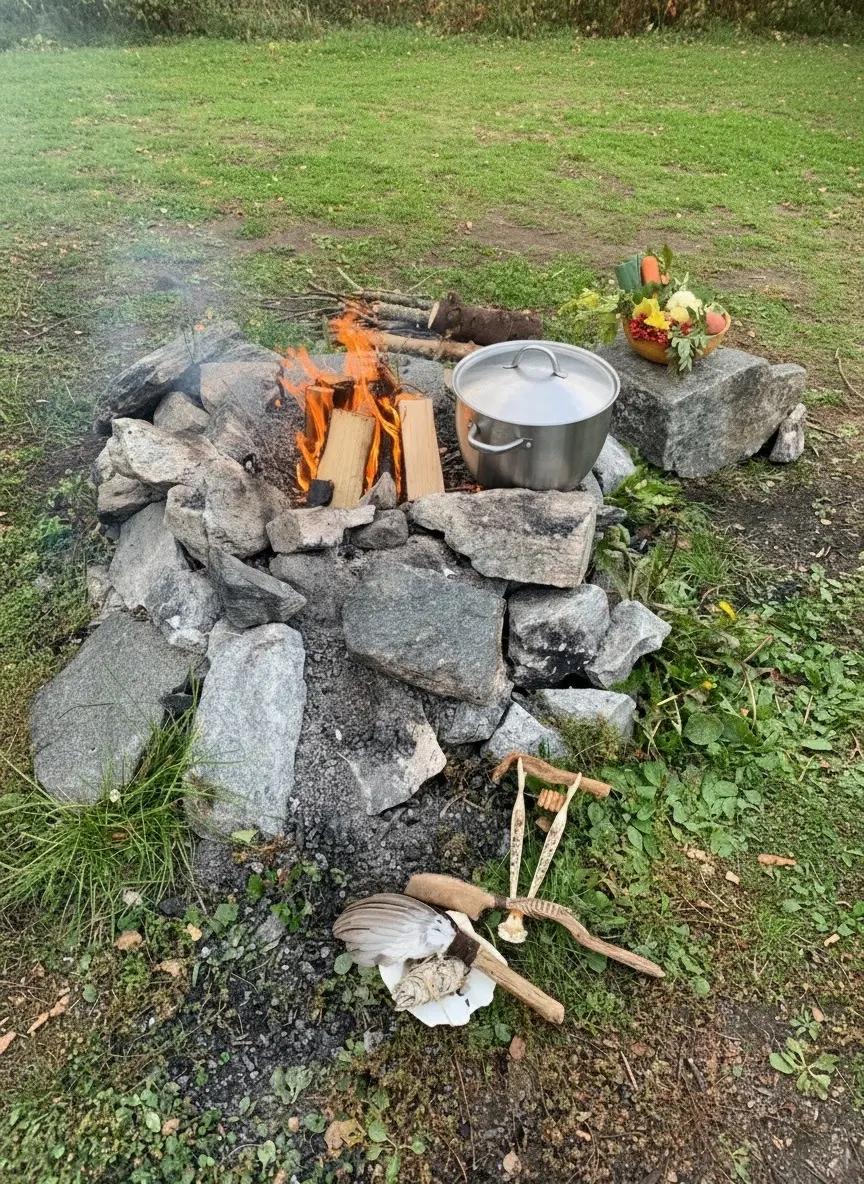
Taking part in a shamanic ceremony can feel both exciting and new for many. Perhaps it is the first time one experiences something like it, and it can stir both curiosity and a touch of uncertainty. That is entirely natural. The most important thing to know is that the ceremony is a safe space, created to support everyone who takes part – regardless of experience or background. The rules and rituals that accompany it are small signposts that help you find your way into this framework. They are not rigid dogmas, but rather a language that both humans and spirits learn to understand together, and which makes the experience safer and more meaningful.
Why the etiquette exists – a language between worlds
How one behaves in a shamanic ceremony has developed over thousands of years, as a shared language between humans and the spirit world. This language concerns how we move, how we honour the fire, and how we relate to what is sacred in the space. When we follow these guidelines, we show respect not only for the tradition, but also for the energy and presence that fill the ceremony. It allows you, the other participants and the spirits to meet one another without disturbance, and gives a sense of safety.
It can be explained as a kind of invisible collective understanding that allows the experience to flow more easily and opens the way for presence and inner calm.
The fire – the warm and gathering centre of the ceremony
At the heart of the ceremony burns the fire, and it is one of the most central symbols. The fire represents life, fellowship and the connection to all that is greater than ourselves. That is why it is important to treat the fire with reverence. Not throwing cigarette butts, rubbish or spitting into the fire is not an unnatural command, but a way of keeping the space clean and open for all the good energy that is to be channelled there.
When we place offerings on the fire with care, we give an intention that the fire and the spirits can receive. It is a moment in which we draw close in shared respect, and in which safety and belonging grow.
The ceremonial objects – silent bearers of power
Drums, staffs, censers and other objects in a ceremony each have their place and function. They carry energy and are used by the ceremony leader to open channels and create balance. Leaving these untouched unless you are given express permission is not first and foremost a strict rule, but a respectful way of safeguarding the energy in the space, while also avoiding confusion or unwanted reactions. The ceremony leaders are there to look after everyone who takes part in a ceremony, the spirit world included.
This helps the whole ceremony to be experienced as a unity, in which everything is connected in a deeper meaning.
The directions – the language of the earth and the heart
When we rise and turn towards the directions – east, south, west, north, up, down and inwards towards the heart – we make a gesture that is both outer and inner. It is about connecting to the rhythms of the earth, to the forces of nature, and not least to one's own inner core.
The seventh direction, inwards, helps us to find balance, calm and presence. It is not something that "must be done perfectly," but a moment to feel that you are part of something greater and at the same time in contact with yourself. If you have trouble with your back or other physical challenges, you can make these movements seated, or symbolically with, for example, a drumstick.
This is a gesture of opening, and an invitation to be present in the moment.
The cleansing with eimilauga – a gentle transition
Being cleansed with smoke from juniper, mugwort or other herbs, called eimilauga, can be experienced as a gentle and simple way to release old energies and calm the mind before the ceremony begins. It is not about doing something "right" or "wrong," but about giving yourself room to land in the present.
The smoke is usually drawn over the eyes, ears, mouth and heart – it is as if your senses awaken, and you are invited into the ceremony with an open mind and an inner calm that you can carry with you further into the experience.
The significance of etiquette for safety and openness
Although it may seem like many "rules," they are really a form of support for everyone who takes part. They create a safe framework where no one needs to wonder what is acceptable or not, and where everyone's experience is respected. When everyone follows these simple guidelines, it contributes to a shared field of trust and calm. The ceremony leader is there to create a good experience in service of the fellowship and the spirit world.
This makes it possible to let go of control, to let body and mind be present, and to open up to both your own experiences and the power of the fellowship.
Fellowship and sharing
When the ceremony is over, there is often time for togetherness, sharing and quiet reflection. There is room both for the person who wishes to talk about their experiences, and for the person who needs time alone. This balance allows everyone to find their own way of integrating what they have taken part in.
An invitation to discover
Shamanic ceremonies carry with them a deep historical anchoring, but they are not difficult or frightening. On the contrary, they invite you to meet the world and yourself in a new way. The rules are like signposts, a language you become familiar with gradually, which opens the way to an experience of safety, belonging and inner calm.
Welcome into this open and inclusive space. There is room for you here – just as you are.
With this approach, the door opens to experiencing the power and joy of shamanism without fear, with respect and curiosity as your signposts. It is about sharing, experiencing and growing – together and each on our own.
If you appreciated this article, we would be very glad for a small Vipps donation to 99687 – it helps us create more content.