Stand before a fire in the cold arctic night. The wind whispers through the birch trees, and a Sami noaidi begins to strike his drum. The sound vibrates through your body, opening doors to a world where spirits dance and the past lives on. Suddenly you hear the echo: this is not merely a Sami tradition. It is the same rhythm Odin used when he learned seiðr from the seeress in Völuspá, the same pulse the Finnish singers called pica-songs to summon fate and healing. This is the story of how Nordic practitioners like you can rediscover your own roots in shamanism – not as a foreign import, but as a living heritage from the people of the ice and the forest.
Asko Parpola, one of the world's leading experts on Finno-Ugric languages and religions, shows in his groundbreaking 2004 article how these traditions are connected like threads in a weave. Don't think of an academic footnote here – think of it as an old weaver revealing the pattern in your own practice. Parpola links Norse seiðr directly to Sami drum journeys and Finnish shamanism, and gives you the tools to understand why your drum feels so right in your hand, even though you have never stood on a plateau in Finnmark. Let us travel into this story together, step by step, like a journey through the landscape itself.
The call of the drum
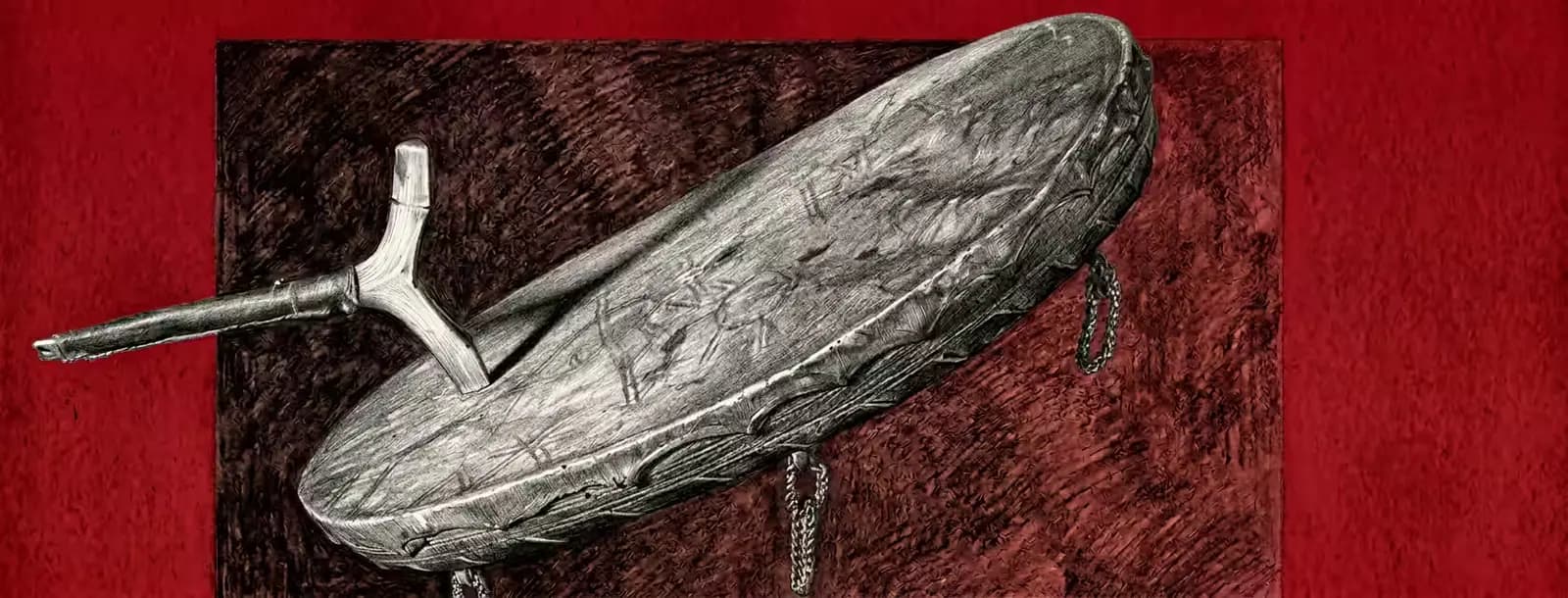
Imagine a noaidi in Sápmi 2,000 years ago. She – or he – sat in the lavvu, surrounded by reindeer hides and the raven's feathers. The drum was the heart of the ritual. Parpola describes how these drums were not merely instruments, but portals: covered with figures of spirits, animals and cosmic paths, they were struck with a hammer of bone or wood to induce ecstasy. The sound created a rhythm that lifted the soul out of the body, journeying to other worlds – just as you perhaps experience when you drum in your own ceremony today.
But wait, this is not only Sami. Parpola draws lines to the Finnish pica-song, a hypnotic chant in which the singer "pulls" – plucks or draws – on the spirit world with rhythmic phrases. In the Kalevala, Finland's national epic, the shaman figure Väinämöinen sings such songs to heal and to navigate between worlds. And then comes the Norse: seiðr, the mysterious art that Freyja taught the Æsir, often involved similar rhythms. In Völuspá it is sung of seeresses as "galdrar" and "seiðr konur", and archaeological finds from the Oseberg ship show women with sorcery symbols that may recall Sami drum designs.
As a practitioner you do not need to dig through old runestones to feel this. The next time you pick up your drum, notice the rhythm: is it pulsing, hypnotic? It is the same pattern Parpola documents – a shared primal rhythm from the indigenous peoples of the north. He points to ethnographic accounts from the 1600s and 1700s, where Swedish priests described Sami noaidi as "sorcerers" with drums that summoned the bear's strength or the wind's spirit. Try it yourself: strike a steady beat, sing a simple phrase over and over, and watch how the boundaries between you and nature dissolve.
Seiðr as a shamanic journey
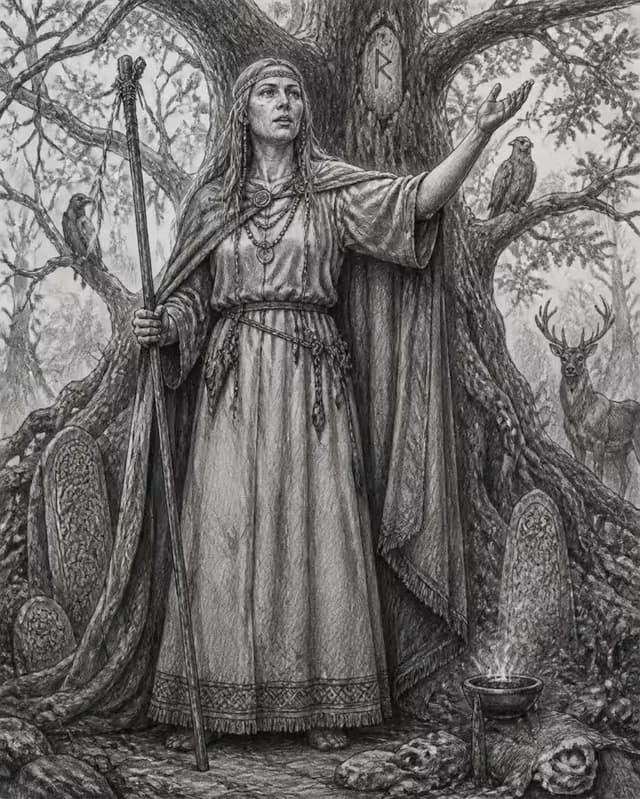
Odin, the one-eyed All-Father, is no Christian construction – he is the shaman's archetype. In the Ynglinga saga it is told that he "knew his galdrar" and journeyed in bird form, spoke with the dead and saw secrets. Parpola argues convincingly that this is pure shamanism: ecstasy-inducing out-of-body journeys, steered by drums or songs. He compares it with Finnish shamans who used "vedun" – a trance state induced through pica-song – to fetch knowledge from Manala, the underworld.
Think of your own journeys. When you lie down after the drumming, do you perhaps enter a similar state? Parpola points to linguistic evidence: the word "seiðr" can be traced to Finno-Ugric roots connected to "song" and "thread-weaving", where the weaving symbolises the web of fates – just as the Norns spin. In Sami tradition, the shaman's "farmstead" – a cosmic farm – is also woven through the patterns of the drum. This is not theory for researchers; it is practice for you who want to strengthen your own work.
Parpola draws on classics such as Åke Hultkrantz, who in "The Ecstatic Experience" (1987) defines shamanism as ecstasy-journeys for the sake of the community. Hultkrantz observed living Sami rituals in the 1950s, where the noaidi "flew" with the drum to find lost souls or game animals. As a modern practitioner you can adopt this: use your drum, sing a pica-inspired phrase such as "Come forth, spirit of the north wind", and let the ecstasy take over.
The Finnish market
In the Viking-age North, "Finns" were not only people from Finland – they were Sami and Finno-Ugric nomads in the north. Norse sagas mention a "Finnish market" where the Vikings traded for "Finnish song" – sorcery songs that Parpola links to pica. These songs were not entertainment; they were the driving force of the shamanic journey, used for healing, weather-working and reading fate.
Parpola cites Icelandic sources such as Eiríks saga rauða, where a Finnish shaman sings to calm the storm. For you as a practitioner today, this means practical tools: make a "Finnish song" based on old phrases – repeated sentences such as "Wind, be still, sea, lie down" – combined with the drum. Parpola shows phonetic similarities between the Norse "galdr" and the Finnish "laulaa" (to sing in trance), something confirmed by linguistic research.
Think of your ceremonies wherever you are, near or far from Finnmark, but spiritually kindred. This knowledge lets you call upon the same powers, with respect for their origin.
Revitalisation
Not everything is rosy. Parpola discusses how Christian missionaries smashed drums and forbade seiðr as "women's sorcery". Yet fragments survived in folk tradition – runes, galdrar and secret songs. Modern revitalisation, as in Sjamanistisk Forbund, builds on this.
Parpola refers to eighteenth-century sources such as Johannes Schefferus's "Lapponia", in which Sami drums are described in detail.
In today's world, with its climate crisis and spiritual hunger, this is worth its weight in gold. The drumbeat reminds us of balance – humans, nature, spirits.
Practical rituals
Let us make it concrete. Here are three rituals inspired by Parpola:
The drum journey: use your drum, sing "Noaidi, journey, goavddis call". Visualise flight over the mountains.
Pica healing: sing repetitively "Pain go, health come" while laying on hands. A parallel to the Finnish pica.
Seiðr weave: with yarn or visualisation, "weave" a thread of fate while you drum. Call on Freyja or the noaidi spirits.
Your heritage
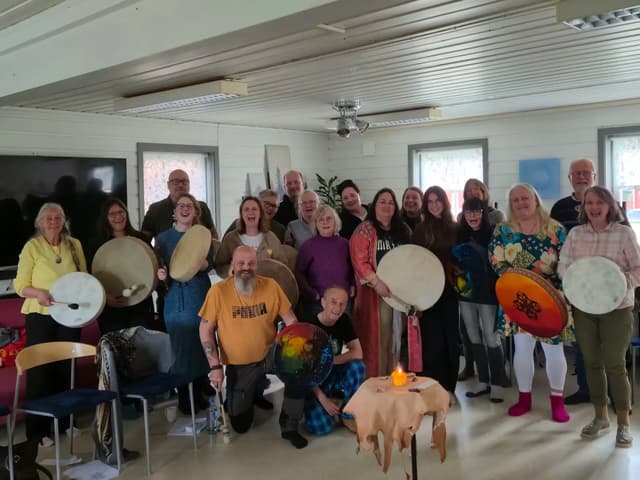
When the drum sounds again, you hear the ancestors. Parpola shows the way back to the roots – seiðr as shamanism. Go out, drum, sing. The world needs your journeys.
(Sources integrated in the text. Primary: Parpola, A. (2004). Old Norse seidr.... Secondary: Hultkrantz and others.)
History vs. modern practice
As practitioners in Sjamanistisk Forbund we want to adapt old patterns to today – but we want to be crystal clear: here we distinguish between what Parpola (2004) documents from sagas, archaeology and ethnography, and our own proposals for revitalisation.
Historical basis
The role of the drum in Sami noaidevuohta and Norse seiðr (descriptions in Schefferus 1673, the Oseberg find).
The hypnotic repetition of pica-songs in the Kalevala and Finnish folk traditions (linguistic traces).
Odin's ecstasy-journeys in the Ynglinga saga and Völuspá (parallel to the noaidi's flight).
The Finnish-market trade in "Finnish song" in Eiríks saga (Viking-age testimony).
Our modern interpretation
The three rituals above: we adapt the drum rhythm and pica phrases to today's ceremonies, based on Parpola's patterns – but phrases such as "Come forth, spirit of the north wind" are our creative choices for accessibility in 2026.
Visualisations such as "weave a thread of fate": a symbolic bridge from the Norns to the noaidi, but not directly cited – our way of making it practical.
Weekly journal note: a purely modern coaching technique to strengthen your practice.
This distinction keeps us true to the roots. Parpola gives the foundation; we build the bridge to your drum today.