A Historic Step for Freedom of Religion and Minority Rights
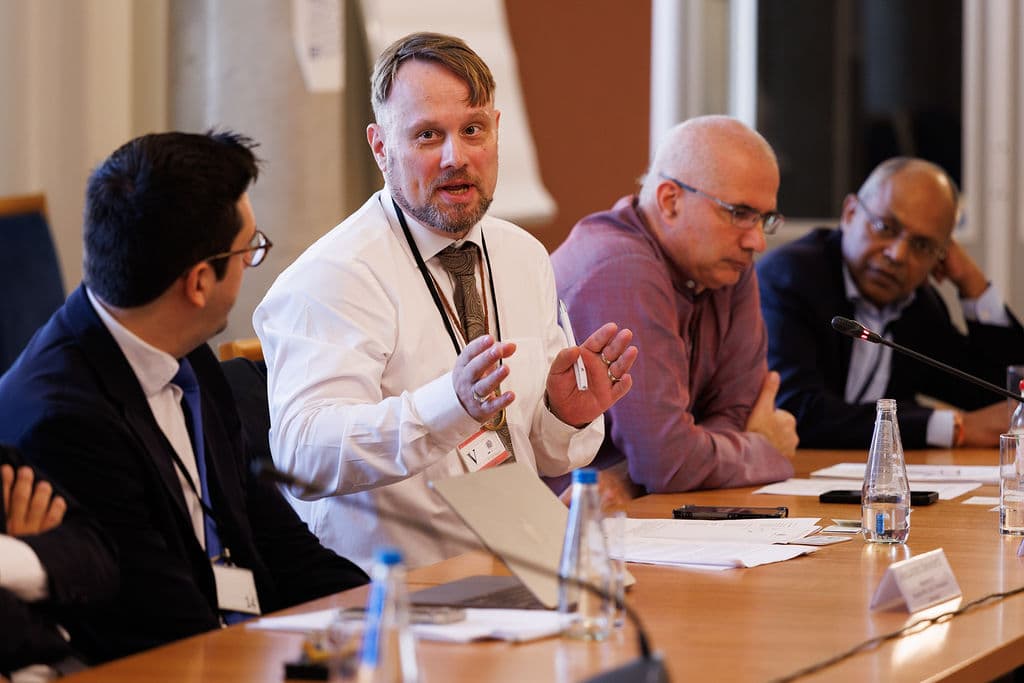
In September 2025, Kyrre Franck of Sjamanistisk Forbund traveled to Warsaw to take part in the OSCE's consultation meeting devoted to the challenges, opportunities, and needs of faith and life-stance communities outside the large established branches. This marks an important breakthrough for the visibility of shamanism and other nature-based religions, and gives the federation a historic opportunity to bring its causes forward at an international level.
The invitation to the OSCE meeting came from ODIHR (Office for Democratic Institutions and Human Rights) and was directed at faith communities that have traditionally been marginalized in European social life.
Through this initiative, the OSCE sought to map the barriers to freedom of religion, open dialogue, and fair treatment, and to shed light on the systemic challenges such minority groups face. The meeting brought together 20 leaders from faith traditions that usually rarely get to take part in formal dialogues with authorities and larger institutions.
Matters Raised by Sjamanistisk Forbund
At the meeting, Sjamanistisk Forbund raised several crucial topics, of both national and European relevance, under the leadership of Kyrre Gram Franck, who also represented ECER.
- Systemic Challenges and Discrimination
The federation presented its report on the systemic disadvantages faced by minority religions in Norway. The main points included:
Lack of public visibility and media access: Established religions dominate both national media platforms and public culture, while minority religions rarely get a chance to be heard.
Skewed distribution of teaching in schools: Christianity takes the leading role in religious education, and pupils are for the most part exposed only to the customs and ceremonies of established religions.
Disputes over rights and funding: The system favors large faith communities, which creates financial incentives to retain members who have left and prevents smaller groups from receiving equal support.
Legal and administrative barriers to ceremonial practice, registration, and access to public resources.
- The Need for Equality in Law and Practice
The federation called for concrete measures to raise minority religions up to the same legal and institutional level as established faith traditions:
Access to public funding based on actual members, not historical records.
The right to have their own ceremonial sites and freer access to public space for the practice of rituals and the marking of holy days.
Inclusion of minority religions in interreligious councils and dialogue forums, rather than exclusion based on "lack of historical continuity."
BIZON PHOTOGRAPHY // PIOTR DZIUBAK
Matters Raised on Behalf of ECER
ECER sought to make visible the shared challenges facing all ethnic and pagan religions in Europe. The most important topics were:
- Systemic Exclusion in Europe
Legislation and practices that hinder and discriminate against the practice of rituals – e.g. bans on bonfires, strict restrictions on gatherings and ceremonial sites.
Legal recognition and the right to marry, bury, and teach sacred traditions on a par with the major religions.
Anchoring freedom of religion as a human right in all member states, not only on paper but in actual local practice.
- Cultural and Institutional Marginalization
The absence of minority religions from national calendars, school curricula, and the cultural public sphere.
Stigmatization and political suspicion against pagan and indigenous religions, including mistaken associations with extremism.
Vandalism of ceremonial sites and sacred objects, as well as a lack of protection from the authorities.
- Academic and Public Misrepresentation
ECER described a widespread problem of trivialization and disparagement of minority religions in academia, often with condescending attitudes and inaccurate descriptions. There is a need for a broader research focus and respect for these communities' own definitions of cultural and ritual heritage, in line with UNESCO's guidelines.
Dialogue at the Conference – Main Impressions and Outcomes
At the conference itself, dialogue sessions were held with representatives from OSCE/ODIHR, European authorities, researchers, and other minority organizations. Important points:
A shared understanding that freedom of religion must apply to all, not only to established groups.
Broad support for improving systems for reporting discrimination and vandalism of sacred sites, and examples from Latvia, Greece, and Norway were presented.
Enthusiasm for input from Norwegian and Nordic experiences with the protection of Sami and indigenous culture, and the transferable value to the marginalized pagan traditions.
Concrete Recommendations from Sjamanistisk Forbund and ECER
At the close of the conference, the following recommendations were presented, from both Sjamanistisk Forbund and ECER:
Strengthen equality in legislation and practice, so that minority religions can marry, bury, and teach on a par with Christians and Muslims.
Recognize ethnic and pagan religions as part of Europe's intangible cultural heritage, in line with UNESCO.
Ensure fair funding systems, and prevent the misuse of membership registers.
Establish and protect ceremonial sites and sacred places, with support from local and national authorities.
Include minority religions in public dialogue bodies and councils, and counteract academic and public stigmatization.
Intensify education about the history and value foundations of minority religions – in collaboration between the state, research communities, and faith communities.
An Important Stage for Religious Inclusion in Europe
Participation in the OSCE meeting has been a milestone for the work of Sjamanistisk Forbund and ECER for religious and cultural inclusion in Europe. For the first time, representatives of shamanistic, ethnic, and pagan traditions have been able to speak directly about their challenges at the European level, and have found a receptive audience for their demands for genuine equality and respect for religious and cultural diversity.
Through its engagement, Sjamanistisk Forbund has made clear that the struggle against discrimination and for equal rights concerns far more than the traditional religious actors. Issues such as visibility, funding, legal rights, and the protection of cultural heritage are crucial for the future of all small and vulnerable faith communities in Europe. This work will also benefit other vulnerable faith communities in Norway and Europe.
The meeting illustrates a turning point in European religious policy, where minority voices no longer stand alone – but gain a place at the table in the major international institutions.

-1.avif)
-1.avif)