Sjamanistisk Forbund has recently received a formal invitation to take part in a consultation meeting with the OSCE (Organization for Security and Co-operation in Europe). The invitation, sent from the OSCE Office for Democratic Institutions and Human Rights (ODIHR), concerns a meeting in Warsaw in September 2025, where the challenges, opportunities and needs of religious or belief-based communities outside the large traditional groups – Christians, Jews and Muslims – are to be discussed. The meeting brings together around 20 representatives from various minority religions and faith traditions in the OSCE region.
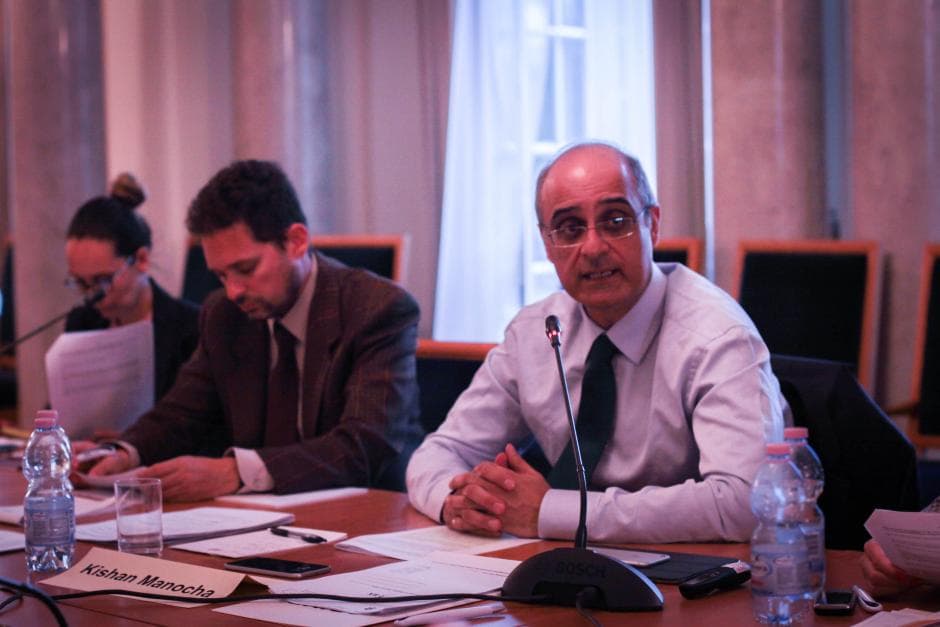
Kishan Manocha, ODIHR's Senior Adviser on Freedom of Religion or Belief, addressing members of the Panel of Experts on Freedom of Religion or Belief, 4 October 2016, Warsaw
The significance of the consultation meeting
This summons is an important step for shamanism as a religious practice in Norway. Shamanism, which is often less visible in the public sphere compared to the established religions, gains through this recognition an opportunity to advance its perspectives and needs at an international level. The OSCE's initiative to include smaller and often marginalized faith and belief communities signals a growing willingness for greater inclusion and understanding across different cultures and religions. In his briefcase, Kyrre carries reports that highlight important points when it comes to systemic challenges and discrimination for faith communities in Norway and Europe.
Systemic challenges for shamanism in Norway
Sjamanistisk Forbund has long pointed out systemic challenges in Norway, where smaller faith communities often face limited recognition, inadequate access to public resources and the legal rights required to practise their faith fully. These systemic disadvantages can include limited opportunities for organized teaching, difficulties with grants, as well as challenges related to ceremonial practice and religious gathering places.
The federation has also approached the County Governor of Agder, asking for an examination and clarification regarding the current practice of state support, which the federation experiences as favouring large established faith communities and implicitly creating incentives to retain members even after they have resigned.
International representation
Kyrre Gram Franck also brings a broader voice as a board member of the European Congress of Ethnic Religions (ECER). In this role he conveys the views of member organizations that represent a diversity of ethnic and Indigenous religions across Europe. Through his engagement he ensures that issues related to freedom of religion, systemic barriers and the need for inclusion are promoted on behalf of both shamanic traditions and other nature-based spiritual communities. His participation thus helps to raise the challenges and ambitions of a broad spectrum of minority religions, and strengthens the dialogue for better understanding, recognition and rights within the OSCE region.
The way forward
Participation in the meeting in Warsaw gives Sjamanistisk Forbund the opportunity to contribute to the development of guidelines and recommendations for how smaller faith and belief communities can be better included both nationally and internationally. Through dialogue and cooperation, such consultations can contribute to more inclusive societies that respect the diversity of religious and spiritual expression.
Sjamanistisk Forbund is now working actively to prepare its representative, Kyrre Gram Franck, for the meeting. They also hope that strong international support can help raise awareness and improve the framework conditions for shamanism in Norway – to the benefit of both the members and Norwegian society as a whole.
This consultation marks not only an important opportunity for Sjamanistisk Forbund, but also a symbol of a broader respect and recognition of minority religions' right to exist and grow in Norway and throughout the OSCE area.
Attached to this article is the report that will form the basis for the points Sjamanistisk Forbund wishes to raise.
-1.avif)
-1.avif)