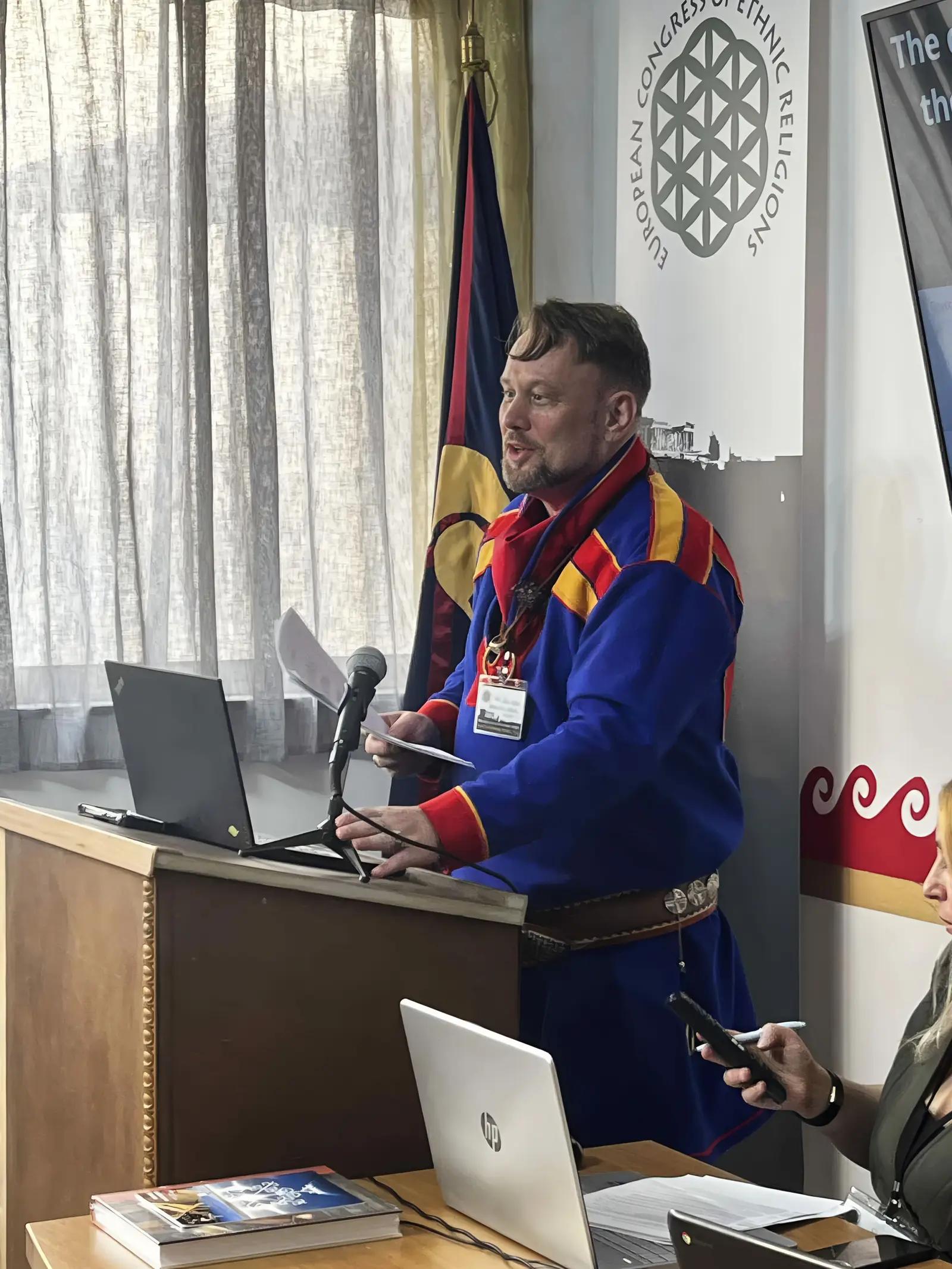
This weekend Sjamanistisk Forbund proudly took part in the European Congress of Ethnic Religions (ECER) 2025, which was held in Athens, Greece. The federation was represented by deputy leader Gro Hilseth Adriansdatter and founder Kyrre Gram Franck, who also sits on the board of ECER. The congress gathered leading representatives from various ethnic religious traditions across Europe to illuminate and strengthen the significance of ethnic religions in the shaping of European identity. This year's theme was "The Contribution of Ethnic Religions to the formation of European Identity," and the three days were filled with lectures, workshops and ceremonies that all reflected this important theme.
The term "ethnic religion" must be understood strictly in its cultural and spiritual sense. It refers to religious traditions that are rooted in particular cultures, peoples and landscapes. These traditions are open to all who approach them with respect, sincerity and dedication, regardless of ethnic or cultural background. What matters is genuine engagement and a willingness to learn, not lineage or origin. Emphasizing this openness is crucial in order to counter prejudice and guard against misinterpretation.
Program and Participation
Sjamanistisk Forbund contributed actively to the program with an inspiring lecture and an interactive workshop. In addition, the federation took part in both the opening and closing ceremonies, which were ritual markings of the congress's spirit and purpose. Through these activities the federation conveyed its unique understanding of shamanic practices and traditions, as a living and dynamic contribution to Europe's religious and cultural diversity.
There was also a little time for sightseeing, here Gro with the President of ECER Uģis Nastevičs
The Significance of Ethnic Religions for European Identity
The congress's main message was to show how deeply and fundamentally ethnic religions have shaped Europeans' worldview, culture and social structures throughout the ages. These traditions are not merely traces of the past, but living systems that bind people together through shared rituals, symbols and stories. They create community and a sense of belonging that goes beyond language and national borders.
Ethnic religions function as a framework for social cohesion, cultural continuity and collective memory. They are the engine behind the creation of peoples, "ethnoses," who share a common way of understanding the cosmos. This narrative underscores how ethnic religions are not only spiritual practices, but also bearers of European cultural heritage and identity.
The Athens Declaration: A Common Voice for the Traditions
The congress concluded with an important joint declaration, known as the Athens Declaration of the European Congress of Ethnic Religions 2025. The declaration expresses a clear appeal to European governments and EU institutions for full recognition and protection of Europe's ethnic religions and traditions. Among the main points of this declaration are demands for:
Full legal recognition of ethnic religions with associated rights such as marriage, naming ceremonies and other life rituals.
Institutional participation of ethnic religious leaders in public ceremonies and state events.
Protection of rituals, customs and sacred days connected to these traditions.
Legislation that ensures the unhindered operation of religious organizations, with tax exemption and state support.
Protection of sacred sites, temples and natural sanctuaries such as groves and lakes.
The right to access and use public sacred sites for religious purposes.
Respect for sacred languages and traditions as fundamental elements of ethnic identity.
Revision of school curricula to give an accurate and respectful representation of ethnic religions.
A guarantee of the right to abstain from religion in school without stigma.
Protection of nature, including sacred forests and ancient trees, against destruction.
This declaration was signed by representatives from 16 organizations in 14 countries, including Sjamanistisk Forbund from Norway. It gathers a strong majority for a common effort on behalf of European tradition and religious freedom based on respect for diversity and historical heritage.
The Significance of Ethnic Religions in Today's Europe
It was emphasized that ethnic religions are not prehistoric relics, but current and vital forces in the development of European society. After centuries of suppression and the replacement of traditional belief systems with monotheistic religions, many societies have experienced moral and ethical weakening. Ethnic religions can contribute to a revitalization of cohesion, honesty and deeper meaning in life, something that also has positive social and cultural ripple effects.
Through rituals and mysteries, these traditions offer a spiritual restoration that promotes sustainability, harmony and healing in both people and the environment. This is also connected to a heightened awareness of the sacredness of nature and the need to protect the environment and sacred sites.
From the closing ceremony at the Sanctuary of the Nymphs in Athens
The Role and Perspective of Sjamanistisk Forbund
As a Norwegian organization with deep roots in indigenous and shamanic traditions, Sjamanistisk Forbund represented an important voice in the discussions about how these ancient, yet still relevant, spiritual traditions can contribute to European identity today. Deputy leader Gro Hilseth Adriansdatter and founder Kyrre Gram Franck took an active part in the dialogue with other leaders, shared insight into shamanism's power to create community and health, and emphasized the necessity of legal and social recognition in order to secure freedom of religion and protection. Through its participation on the board of ECER, Sjamanistisk Forbund ensures that the Scandinavian voice is heard.
The Way Forward
The declaration from Athens calls on all ethnic religious groups to continue cooperating and strengthening networks such as ECER, in order to support one another in the struggle for recognition and rights. Sjamanistisk Forbund will continue its engagement both nationally and internationally to realize these goals, and to contribute to the rich diversity and deep spirituality that ethnic religion represents in Europe.
Through education, ceremonies, and cooperation with authorities and civil society, the federation will work to ensure that ethnic religion and cultural heritage not only survive, but thrive as a vital cornerstone of European spiritual life and identity.
This congress and the powerful declaration mark a turning point in the work of restoring and strengthening Europe's ethnic religions and their associated cultures. Sjamanistisk Forbund is deeply grateful for the opportunity to take part in this historic event and looks forward to the important steps that lie ahead.
-1.avif)
-1.avif)