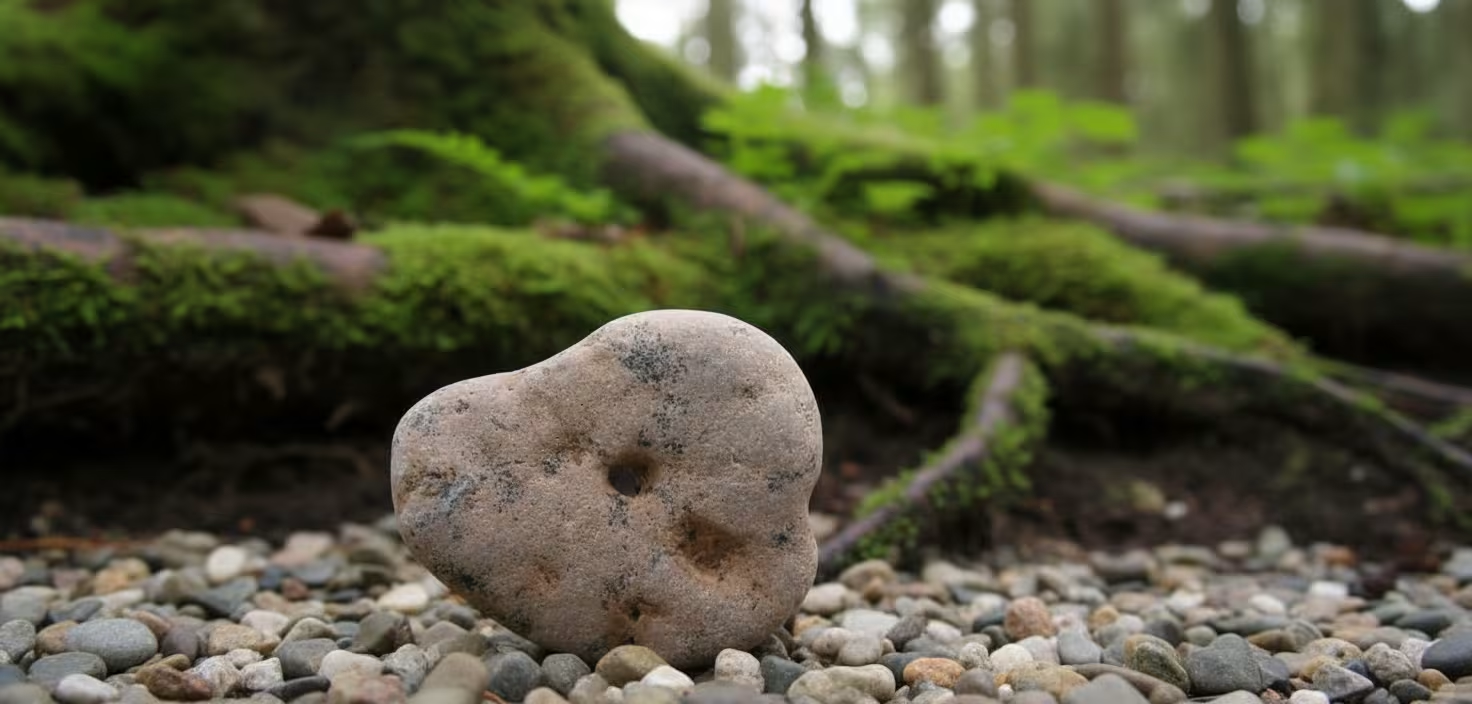
Throughout the ages, shamans in cultures all over the world have been closely bound to the gifts of nature – bones, herbs and, not least, stones. These stones have been more than mere physical objects; they have served as allies and as powerful tools for those who walk between the worlds. Shamans can even be defined by the stones they carry, both in life and in death.
Archaeological finds give us glimpses of this close connection. One example is the grave of a shaman at Upton Lovell Barrow, Wiltshire, where a polished snow-white crystal stone was found on the shaman's chest. This testifies to the deep significance stones have held, as more than mere ornament – they are bearers of mystery, power and communication.
Modern shamans continue this tradition by using stones in countless ways. The stones are companions throughout life's journey, both as medicine and as talismans. Some stones are used as tools for divination, such as rune stones or casting stones, and serve as doorways to the other world. Today, shamans in Costa Rica, for example, may blow sacred smoke over a stone to send messages to spirits in other realms.
Stones as a bridge to the unseen
Stones are also used to divine and to see beyond ordinary reality. Magical crystals such as crystal balls have been used for centuries, and in our own time we recognise mirrors like the dark scrying glass that the wicked queen in the fairy tale of Snow White consults: "Mirror, mirror on the wall, who is the fairest of them all?" Many shamans have used stones to diagnose and treat ailments of mind, body and spirit. Pendulums for so-called dowsing, a practice that searches for water or energy lines, are often made of stone.
Many stones are commonly called shaman stones, either because of ancient stories or modern marketing. But each stone carries its own power and medicine, and it is a matter of finding the one that resonates with you. It may just as well be a simple pebble from a riverbed as a semi-precious stone.
Some well-known shaman stones and their stories
Amber is a stone that has been highly prized for thousands of years. With its warm, golden colours and its warmth to the touch, it is associated with the sun and sun gods. Amber is fossilised tree resin, and thus carries the spirit of the trees and the forest, both past and present. By using amber one can connect with the energy of nature and the magical art of healing oneself. It is also linked to the Norse goddess Freyja, who is associated with journeys, dance and song. Amber is strongly tied to Slavic culture, and according to a Latvian legend, amber is the tears of the sun.
Witch stones, also known as Odin stones or adder stones, are stones with natural holes. They have traditionally been used as protective talismans against illness and evil spirits. Magically, one can look through these stones into the other world, or see the state of a person's health. In Norse mythology they are associated with the god Odin, who sacrificed one of his eyes for wisdom and hung himself upside down in the world tree to discover the secrets of the runes.
Lampivaara amethyst comes from Pyhä-Luosto National Park in Finland and is a combination of amethyst, snow-clear quartz and smoky quartz. This stone has a deep spiritual energy that opens the crown chakra and the third eye, and helps one connect with the spirit world. It holds a strong grounding to Mother Earth, and is therefore an excellent stone for shamans who wish to work with both the spiritual and the earthly, especially in connection with Sápmi.
Moldavite is a green glass stone formed by a meteorite impact in Bavaria and the Czech Republic. This stone carries a power that many experience as otherworldly. It is ideal for those who channel spirits, undertake shamanic journeys to the stars, or who are going through great life changes such as puberty, menopause or the beginning of new phases of life.
Moqui stones, or Mochi marbles, are small, hard-packed sandstones with an iron shell. They are often found in pairs that symbolise the feminine and the masculine, yin and yang. Traditionally used by Indigenous tribes such as the Navajo and Hopi, they are associated with the spirit play of the dead ancestors. With these stones one can balance the energies of the universe and bind together past, present and future.
Shaman quartz, also called dream quartz or lodolite, is a unique type of quartz from Brazil that contains mineral inclusions such as chlorite and feldspar. This stone awakens the inner shaman, enhances psychological abilities and is excellent for trance work and dream work. At the same time, it keeps the user grounded to the world, so that lessons from the ancestors find a practical place in life.
Snow quartz, a white, opaque variety, is connected with healing and spirituality. It was used in ancient cultures that decorated Newgrange in Ireland. Famous healing stories are linked to snow quartz, among them St. Columba, who made healing elixirs with it, as well as legends that it could cure rabies. White is a spiritual colour, and snow quartz is a powerful ally in contact with the spirit world.
Sources:
Shaman stones by Ceri Norman
-1.avif)
-1.avif)