A Book That Whispers
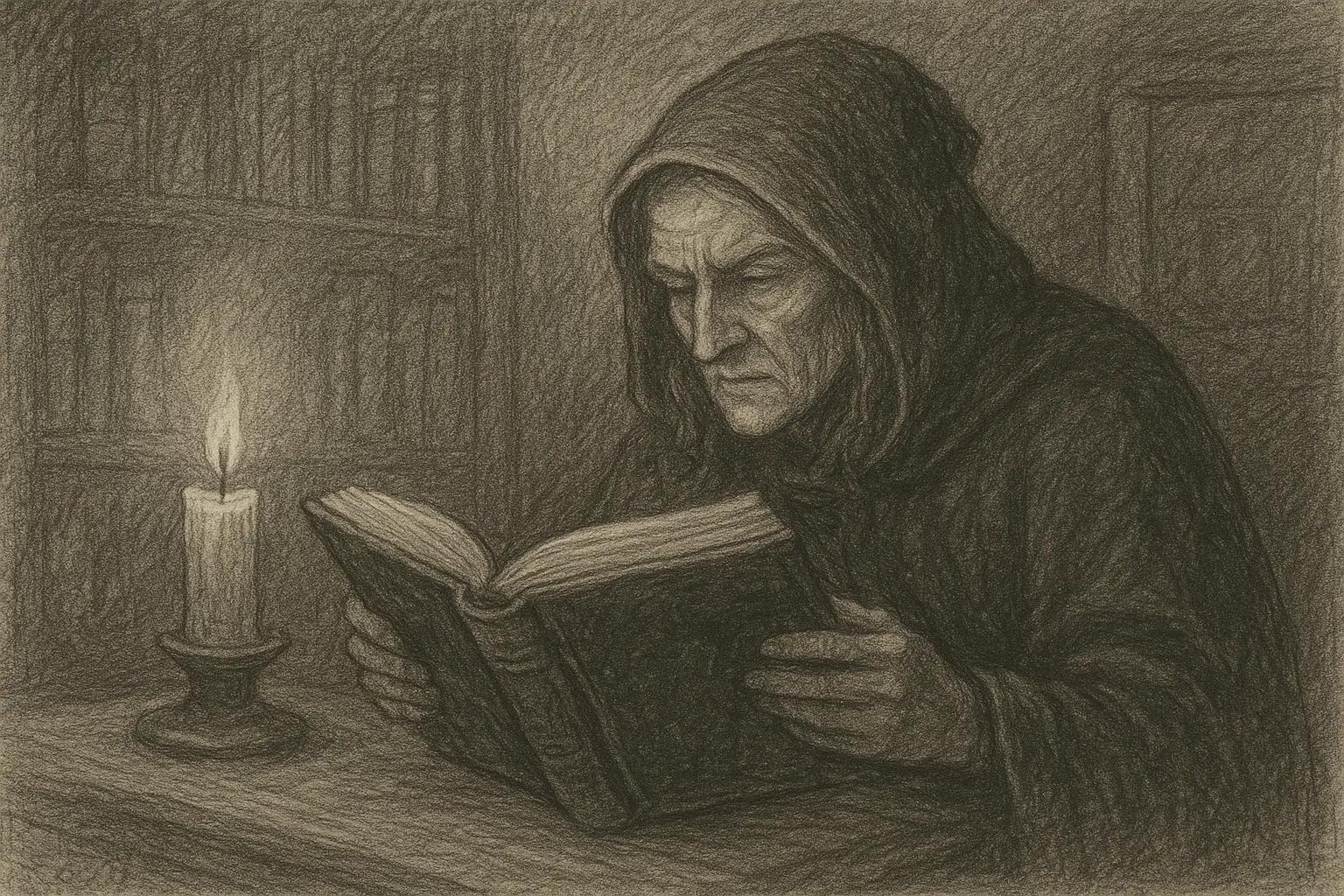
Picture yourself standing in the loft of an old farmhouse. Rays of sunlight slip in through a small window, and dust dances in the air. You open a chest that has stood closed for several generations, and far in the corner you find it: a thick, worn book with a dark cover. It smells of earth and time. The pages are full of strange signs, prayers, verses, and small rituals written in ink that has nearly faded away.
This is a black book.
For many it was an object of fear. The authorities and the church called it the devil's book. But for others it was a hope, a tool against illness, misfortune, and need. The black book was used by people who truly believed – and some who still believe – that words, signs, and rituals can heal, protect, and change reality.
Words as Reality
In our time, words are first and foremost communication: messages, comments, memes. But for people in the Nordic countries in earlier times, words were more than signs on paper. They were living forces.
A formula could stop the blood from an open wound. A verse could make a fever loosen its grip. A prayer could protect the livestock against wolves.
Sometimes these words were sung, other times whispered in the dark, and often they were written down in black books. There they were preserved as secret recipes for intervening in the world.
When we read such texts today, they may look simple – short verses, strange rhymes. But for people back then, uttering them in the right way was as effective as swallowing a medicinal pill is for us.
The black book was never a single book, but many different collections. Some were full of old folk-belief formulas, others a mixture of Bible verses, hymns, and pagan words.
For a farmer, the black book could be the key to finding out who had stolen his hay. For a midwife, it could provide rituals to help with a birth. For a fisherman, it could promise good catches.
But the books were dangerous to own. During the witch trials, a black book could be deadly evidence. Yet they never entirely disappeared. Many were hidden under floorboards, in churchyard soil, or behind secret panels in the walls. Some were passed down, in secret, from generation to generation.
Healing Through Passages
One of the most fascinating traditions researchers have found is what is called "passing through" – healing through passages.
A sick child could be passed through a hole in a tree, between two stones, or through a wreath made of branches. The idea was that the illness was left behind on one side, while the child came out healthy on the other. Often a formula was spoken at the same time: words that "cut off" the illness and bound it fast to nature. In this way the forest, the stones, and the trees became part of the healing. In our modern world this may seem like symbolism, but for many people today who seek their way back to nature, such rituals make sense. They give a feeling of taking part in something greater, of releasing illness or pain through a physical act.
When Church and Magic Merged
Although the church often fought against sorcery, Christian words and symbols became part of the magic. A Bible verse could be just as much a spell as a prayer. The sign of the cross was used for protection, and many black books are full of quotations from psalms and gospels.
For most people this was not a conflict. They did not see the difference between magic and religion, but used everything that could help. If both God and the old powers of nature could stand on their side, that was only a strength.
Magic as a Social Force
Magic was not only about illness. It was woven into everyday life.
A young woman could use a formula to get dreams about the one she was to marry. A man could try to protect his grain field against the envy of neighboring farmers with a charm. A herdsman could use word magic to secure the cows against wolves.
But magic was always ambivalent. Those who knew "too much" could be both respected and feared. Rumors spread quickly: "She can bind milk," "he can see in the water." And just as quickly, a respected healer could be branded a witch.
When Magic Was Criminalized
In the 1600s, magical texts became a dangerous burden. During the witch trials, even a scrap of paper with a simple formula could be enough to condemn someone to death.
We know today that many of these texts were really prayers or healing verses. But in a time when fear of the devil dominated, everything was interpreted as black art.
This caused magic to go underground. The black books became even more secret, and the knowledge was passed on in hidden rooms, in song, and in whispers.
The Researchers Who Find the Texts Again
Today there are researchers who collect and study all of this. They find black books in archives, old church records, and private collections. They study the words to understand how the people before us viewed illness, nature, and the universe.
ARV: Nordic Yearbook of Folklore 2014 puts particular focus on how magic and texts are connected. It is not only the belief that is interesting, but the very way the texts were written and used.
And when we look at these old texts, we can hear the echo of the voices that used them – people who truly believed that healing was possible, and that the words carried forces that could change the world.
The Return of Magic
Perhaps the most exciting thing is that this tradition is not dead. Today there are people in the Nordic countries and elsewhere in the world who draw inspiration from the old texts. Some see it as cultural heritage, others as living practice.
Healing, shamanism, and nature magic are experiencing a renaissance. People once again go to the forest to find peace, to rituals to find meaning, and to old words to find strength.
The black book has taken on new forms – in art, in literature, in new-spiritual movements. But it is still about the same thing: using words, symbols, and acts to create change.
For those who believe, this is more than history. It is a way back to a lost wisdom, and a reminder that humans have always sought healing – not only in medicine, but also in magic.
Why It Matters
When we read about black books and magical texts, we are not just reading old tales. We are reading people's attempts to understand life. We are reading hope, fear, and dreams written in ink and breath.
Today we may laugh at the thought of healing illness by passing through a tree. But at the same time we know that nature, rituals, and words can still have a healing effect – if not always physically, then on soul and mind.
Perhaps that is precisely why magic fascinates us again. It reminds us that we are more than just bodies and numbers. That we carry stories, symbols, and longings.
A Book That Never Dies
The black book is more than an object. It is a symbol of humanity's eternal search for meaning and power. It was feared and hidden, but also used and loved.
Today, as people once again turn to healing, shamanism, and old words, the black book is opened anew. Not as the devil's book, but as a legacy we can learn from.
And perhaps, when we leaf through old pages or hear an old formula, we can sense that magic never entirely disappeared. It has merely waited – quietly – for someone to open the book again.
-1.avif)
-1.avif)