In the dark, snow-covered December cold, when the wind howls across the high plains and the mountains whisper ancient secrets, the old pacts between human and animal come to life. From a shamanic standpoint, Christmas and January are not only holidays for us humans – they are the time when we remember our sacred obligations to the small birds tripping hungrily in the snow, the squirrels hiding their nuts in the mounds, the doves that remind us of lost bonds, and the larger creatures such as roe deer and elk that roam the rural land. These months, traditionally the coldest and hardest, demand that we act with heart and respect, for the animals are our allies in the great web of life.
The Mound Farmer Wakes in the Snow
Long ago, long before the lights in the Christmas trees twinkled and modern gifts filled living rooms, there lived an old farmer on a lonely farm at the foot of a snow-crowned mound. His name was Eirik, and he knew that Christmas was not his alone. In the mound right behind the barn lived the mound farmer, the old guardian of the earth, a small figure with a grey beard and eyes that glowed like embers in the hearth. The mound farmer was not a tyrant, no – he was a weaver-master, who braided the roots of the trees into the fates of the animals, and he expected his share of the harvest's abundance. But in December, when the frost bit into the ground and the river froze to ice, the mound farmer turned to Eirik with a plea: "Look after the little ones, for they are my eyes in the forest."
Eirik nodded, for he remembered the old pacts. Just as the Sami had received the reindeer from the Daughter of the Sun, a gift with joik and respect, humans had entered into promises with the birds and the mammals. The doves, the loyal messengers from Mesopotamia to Nordic farmyards, asked for our care since they were once made dependent on us. The squirrels, the clever storehouse builders, recalled the balance of the forest – without them the nuts would rot unused. And the small birds, tits and sparrows, were little spirits that carried our gratitude. Eirik began with them. Every morning, before the sun rose, he scattered seed in the snow by the barn: sunflower seeds for the tits, oats for the sparrows, and a few breadcrumbs for the doves that pecked around the farmyard. Not to feed himself, but to keep the pact alive.
The Barn Nisse and the Animals in the Barn
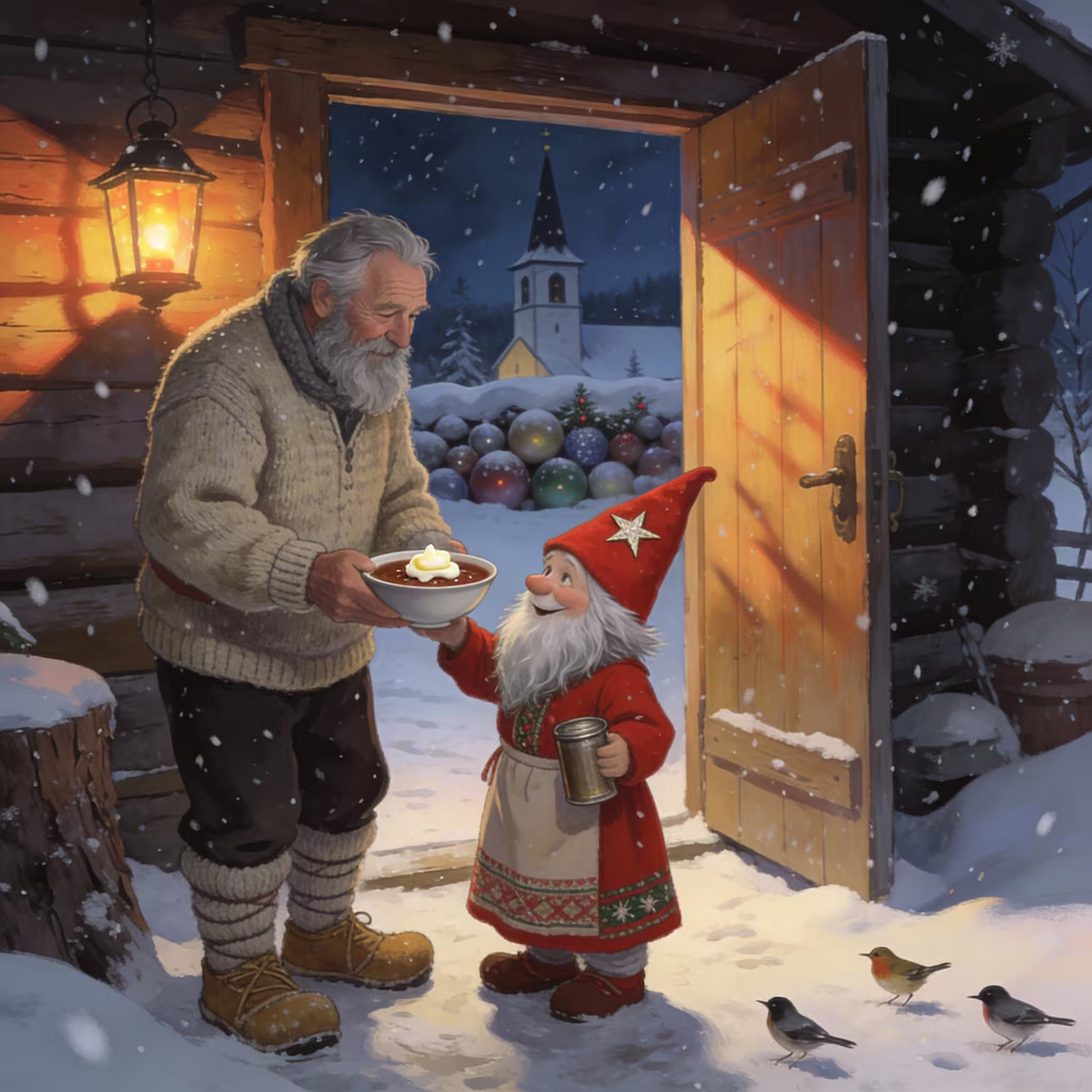
While the mound farmer guarded the mounds, the barn nisse had his realm in the dark, warm barn. The barn nisse, the little red man with a white-grey beard and a cap like a Christmas star, was not the merry gnome we know today – he was the farm guardian, the one who saw to it that the cows gave milk, the horses stayed healthy, and the pigs grew. In the old traditions, the little folk – tussers, nisses and the underground people – demanded their plate of Christmas porridge in the barn loft on Christmas Eve. Without it they grew sour, and misfortune struck the farm: the cows fell ill, the hens laid no eggs, and the squirrels stole grain from the chest.
In Eirik's barn the barn nisse sat on a beam one cold December evening, watching the hungry doves that chirped outside. "Humans have forgotten," he muttered, "but the pact still lives. The doves flew for us in the old days, carrying messages from the gods. Now they are our guests." Eirik heard the whisper in the wind – the shaman's ear is always open – and set out a bowl of porridge topped with butter and a crumb for the doves. The next morning the barn was warm, and the animals lively. The barn nisse nodded contentedly, and stretched his invisible hand out across the fields. To the roe deer that gnawed the bark at the forest's edge, to the elk that stamped through the snow, and to the foxes that crept near the farm. "Drink of the Christmas water," he whispered, for tradition said that the water at midnight on Christmas Day healed everything.
For those who live in rural areas, this became a habit. Lay out apples and carrots for the roe deer – not too much, but enough to show respect. The elk, the majestic king of the forest, needs a salt lick and hay in January's ice-cold nights. And do not forget the hare, the shy runner that bounds over snow drifts, or the fox that hunts in the moonlight. The little folk watch over them all, and when we help, we strengthen the web.
The Little Folk's Christmas Procession
One night, while Eirik sat by the fire and joiked softly to calm his soul – a Sami echo of respect for the reindeer – he heard small footsteps outside. It was the little folk on their wandering: nisses from the mounds, tussers from the forest, and the barn nisse's siblings from neighbouring farms. They gathered around an old oak, where the squirrels had hidden their nuts, and held a meeting. "The winter bites hard this year," said the mound farmer, his voice like rustling leaves. "The small birds are starving, the doves freeze on the rooftops, and the roe deer have forgotten the paths to their food." The barn nisse nodded: "Humans must remember the pacts. The Daughter of the Sun gave the reindeer with obligation – nothing wasted, everything honoured. So it shall be with all."
The little folk sent a dream to Eirik. He woke with a start and saw visions: doves flying with messages of peace, squirrels dancing in the spruce trees, tits chirping their thanks. The next day he gathered the neighbours. "Let us be the guardians of the pacts," he said. They scattered seed everywhere: for the tits, the waxwings, the bullfinches and the birds nesting in the bushes. For the squirrels they laid out walnuts and hazelnuts in the hollows by the stumps. The doves were given grain and water in old troughs. And for the larger ones – roe deer, elk, fox and hare – they set out bales of hay, apples and salt blocks in the fields, far from the roads where cars lure danger.
In the cities, where the snow lies grey, people could do the same. Hang up suet balls for the small birds – boiled fat mixed with seed, dangling like Christmas ornaments in the bushes. Doves gather by the churches, recalling old offerings; give them rye bread and oats. Squirrels often come to parks – toss nuts under the oaks. And everywhere, remember January: the longest nights, when the frost quarrels longest. That is when the animals need us most.
The Great Christmas Hunt for Goodness
Eirik and the little folk continued their wandering through December. One evening they met a herd of roe deer by the riverbank, thin and trembling. The mound farmer blew an invisible horn, and the animals drew near. Eirik handed out carrots from the cellar – not theft from the farm, but abundance from the pact. "We use everything," he thought, as the Sami did with the reindeer: the hide for clothing, the bones for tools, but now it was about giving back. The barn nisse laughed softly: "Look at the elk over there! He carries the spirit of the forest. Give him hay, so he stands strong against the wolf."
Other animals appeared in the winter night. The fox with its red fur, hungry for Christmas abundance. Lay out scraps of meat or fish, but keep your distance – respect is the key. The hare, the fertile runner, needs bark and twigs from birch. And do not forget the owl, the wise one of the night, who hunts squirrels and mice but herself starves in the storm – let the small birds live to feed her. The little folk danced around the fire they lit in the forest, an old-fashioned Christmas feast where nisses and tussers sang songs of balance. "Broken pacts bring misfortune," warned the mound farmer. "The wolf became an enemy when we forgot the brotherhood. But now we restore it!"
In January, when Christmas ebbs away but the cold bites, Eirik continued. He built birdhouses filled with seed, set out water baths with warm stones beneath the ice. The neighbours followed: A woman in the village hung up nets of suet for the blue tit and the willow warbler. A farming family laid out apples for the roe deer every evening. The elk's tracks in the snow showed the way, the squirrels' climbing in the trees gave hope. The little folk nodded from the mounds: "This is the shaman's path – to weave ourselves into the heart of nature."
The Legacy of the Pact and the Little Folk
The years passed, and Eirik's farm flourished. The animals thrived, for the pacts were kept. The doves returned home with messages of peace, the squirrels filled the forest with life, the small birds chirped in praise of spring. The mound farmer and the barn nisse became legends, but their voices live on in us. Today, in our time of climate's fury and the length of winters, they call us back. From a shamanic perspective it is not charity – it is a sacred duty. Care for the small birds with seed and balls, the squirrels with nuts, the doves with grain. Living rurally? Help roe deer, elk, fox and hare with food that does not harm the balance. The little folk are watching, and when we act, Christmas warms us all.
Let this story be your guide. Go out into the snow, hear the whisper of the winds, and be a guardian of the pacts. For in cold Christmas nights and January winds we find not only a feel-good moment – we find home, in the web with the animals and the little folk. Eirik smiled towards the mound one last time: "Thank you, old friends." And the snow fell softly, like a blessing from the Daughter of the Sun herself.
Have a beautiful celebration.
-1.avif)
-1.avif)