When the Mountain Whispers and the Drums Call
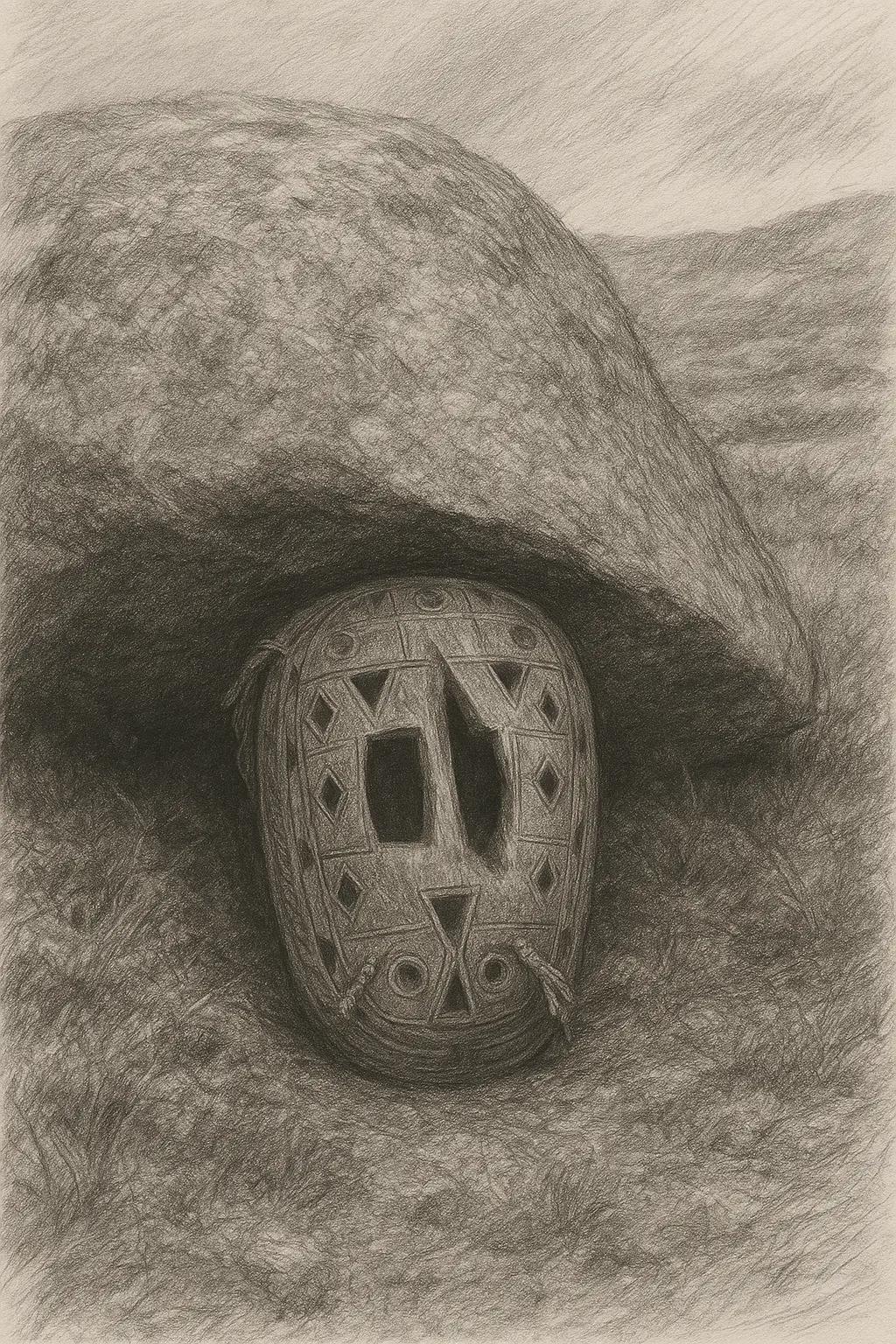
Imagine setting out on a journey of discovery through the mountains of northern Norway on a windy autumn day. Suddenly you catch sight of something unexpected beneath a large boulder: an old, worn drum, with remnants of leather and pieces of metal dangling like leftovers from a time when magic and the supernatural were as real as the wind you feel against your face. Who placed this drum here? What did it mean to the people who used it?
This is not merely a fairy tale. This is the story of the Noaidi, the Sámi shamans, who for several hundred years used drums and rituals to guide the people through life's great mysteries, to search for lost reindeer and to speak with powerful spirits.
What is noaidevuohta?
Noaidevuohta – often referred to as Sámi shamanism – is a somewhat secretive tradition, but perhaps it can be compared to being a kind of intermediary between our own world and all that is invisible. A noaidi is not like an ordinary priest or sorcerer; the noaidi uses trance to "travel" to other worlds – often to find out why someone is ill, to help with hunting and fishing, or to obtain answers from the spirit world. Many also believed that a noaidi could take the form of an animal or hold conversations with the spirits of the ancestors.
An outer and highly visible part of this tradition was the drum. The deep rhythms of the drum opened the gates between the known and the unknown – between humans and the hidden forces believed to lie behind everything that lives.
How were the drums made – and why?
Sámi drums were handmade masterpieces. In South Sápmi – that is, the South Sámi areas of Norway – the frame drum was common: a thick piece of wood bent into a frame and covered with reindeer hide. On the hide, mysterious symbols were painted. The sun was often placed in the centre at the top of the drum, and around it there could be figures for the sky, the earth and the underworld. Every single line, dot and figure could hold a deep secret: perhaps they symbolised sacred places, spirits, humans, animals – or the path onward after death.
Sometimes the drums were adorned with rings, pieces of metal and leather straps that jingled and rang while the drum was played. This was not just exciting – the sound made people fall into trance and heightened the atmosphere during the rituals. Drumsticks were usually made from reindeer horn – an animal the Sámi have loved and lived closely with for thousands of years.
Magic in the mountains – the fate of three drums
In the late 20th century, hikers and hunters found three South Sámi drums deep among the Norwegian mountains. The drums had lain hidden beneath large stones for years – indeed, perhaps for hundreds of years! Around the drums lay strange little objects too: metal buttons, pieces of horn, shining stones, and scraps of textile that may have had magical functions – for why else would anyone weave a pattern running in different directions for the sake of decoration alone?
People knew that such drums carried power. Many were in fact reluctant to touch them. "Be careful," some said, "or you'll bring misfortune home with you!" There is a tale of a man who found a drum and shortly afterwards saw a great raven sitting and staring at him – as if the spirit world itself were keeping watch over what he was doing.
What did they actually use the drums for?
The best known use was the drum as a key to trance. When the drum sounded, the shaman could "travel" to other worlds on a spirit journey – for example, to search for lost souls, to pray for luck in the hunt, or to heal the sick. But just as often the drum was used for divination: a small "pointer" (often a ring of metal or a white stone) was placed in the centre of the drum. When the shaman beat out the rhythms, the pointer began to dance – and where it stopped on the various drawings determined the answer to the question being asked. Would the herd find the reindeer? Would someone recover? The answer might lie hidden in the drum's magical map.
The forbidden power of the drum
In the 18th century, the Christian missionaries regarded the drums as a threat. They believed that Sámi faith and magic had to be done away with, and so they launched a large-scale campaign to collect and destroy drums. Over a hundred drums were gathered and sent to the King in Copenhagen – many were later lost in a great fire. That is why the drums that survive today, in museums or in the mountains, are especially rare and valuable. They were hidden away by owners who wanted to protect both themselves and their secret knowledge.
What did the ancient tales teach us?
As early as the Middle Ages, Icelandic and Norwegian writers wrote of Sámi "sorcerers" with magical powers, even if they did not always mention the drum directly. Later accounts from the 17th and 18th centuries – from both Swedish and Norwegian priests, but also from the Sámi themselves – tell concretely of the drum's power and how it could be used to fall into ecstasy, to speak with spirits and even to heal the sick.
One of the most fascinating accounts is from Finnmark, where old Anders Poulsen related that it was his own mother who taught him to use the drum. Yes, women too could be powerful noaidi! Some accounts are dramatic: the noaidi falls to the ground, foams at the mouth, and the body turns black… other times the stories are calm and matter-of-fact – the drum is simply used within the family to settle everyday questions. Even within shamanism, then, there was great diversity.
What about archaeology and Stone Age images?
Can shamanism be found in ancient burial mounds or on rock faces? Perhaps, perhaps not. Some researchers believe that symbols in the rock art from Alta can be interpreted as drums or spirit journeys – but no one can be entirely certain. What can be said is that the symbols and rituals have left deep traces over many thousands of years, in stone, hide and bone, and in people's tales.
The legacy lives on
Even though much of Noaidevuohta, the old Sámi shamanism, was threatened or subjected to attempts at eradication, the legacy lives on today: in stories, in research and, not least, in a new pride in the culture. The rhythm of the drum may no longer be heard as often around the fire – but for those who listen closely, an echo of the old Sámi heartbeat can still be heard. New people carry the legacy onward.
In this way the story of the Sámi drums shows how humans have always sought magic, connection and understanding – whether in the dance of the stars, the tracks of the reindeer, the deep resounding voice of the drum, or in the wind across the highland plateau. Perhaps there are still secrets hidden in the mountains, simply waiting to be found?
Sources:
Berglund, B. (2010). Shamanism and Material Culture in the Northern Circumpolar Area, Brought to the Fore by Some Newly Discovered South-Saami Drums With Accessories in the Norwegian Mountains. In: Westerdahl, C. (ed.), A Circumpolar Reappraisal: The Legacy of Gutorm Gjessing (1906–1979). Proceedings of an International Conference held in Trondheim, Norway, 10th-12th October 2008. BAR International Series 2154, Archaeopress, Oxford.
Eliade, M. (1998). Sjamanisme. Henrykkelsens og ekstasens eldgamle kunst. Pax Forlag A/S, Oslo. Orig. title: Le chamanisme et les techniques archaïques de l’extase.
Bäckman, L. (1978). Types of shamanism: Comparative Perspectives. In: L. Bäckman & Å. Hultkrantz (eds.), Studies in Lapp Shamanism. Acta Universitatis Stockholmiensis, Stockholm Studies in Comparative Religion 16, pp. 62–90.
Manker, E. (1938). Die lappische Zaubertrommel I. Nordiska Museet. Acta Lapponica 1. Stockholm.
Hultkrantz, Å. (1977). Ecological and Phenomenological Aspects of Shamanism. In: Bäckman, L. & Hultkrantz, Å. (eds.) Studies in Lapp Shamanism. Acta Universitatis Stockholmiensis/Stockholm Studies in Comparative Religion, pp. 9–35. Stockholm.
Zachrisson, I. (1991). The Saami Shaman Drums. Some Reflections from an Archaeological Perspective. In: Ahlbäck, T. & Bergman, J. (eds.), The Saami Shaman Drum. Scripta Instituti Donneriani Aboensis XIV, pp. 80–95. Åbo.
DuBois, T. A. (2009). An Introduction to Shamanism. Cambridge University Press.
Diószegi, V. (1963). Zum Problem der etnischen Homogenität des tofischen (karagassischen) Schamanismus. Glaubenswelt und Folklore der sibirischen Völker, pp. 261–357. Akadémiai Kiadó, Budapest.
Qvigstad, J. (1903). Kildeskrifter til den lappiske mythologi. Det Kongelige Videnskabers Selskabs Skrifter, 1, pp. 1–90. Trondhjem.
Johansen, A.B. (1979). Nordisk dyrestil – opphav og bakgrunn. AmS-Skrifter 3. Stavanger.
-1.avif)
-1.avif)