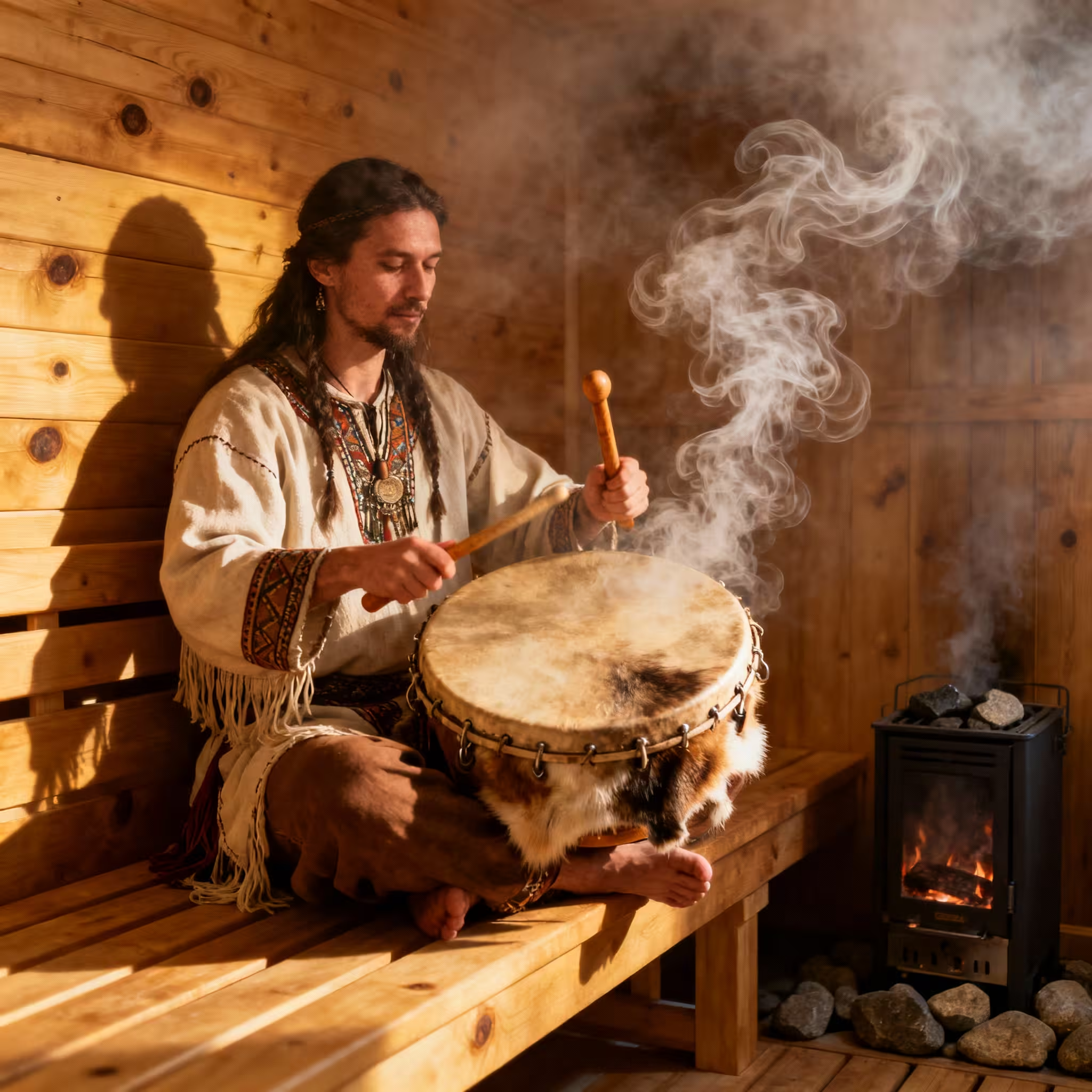
In recent decades shamanism has made a significant entry into Western spa and wellness experiences. Elements such as sweat lodges, often inspired by the North American sweat lodge tradition, as well as drum journeys and various meditative rituals, have become increasingly popular at retreats and wellness centers all over the world. From a shamanic faith and practice perspective, this development is complex: on the one hand it offers Western people invaluable insight into the power of nature, physical and mental health, as well as the opportunity to seek profound contact with themselves; on the other hand it opens up serious issues around the dilution of traditions, cultural appropriation and a lack of respect or understanding for what shamanism actually encompasses.
Shamanism as a philosophy of life and a practice
Shamanism is not one single religion or practice, but rather a diversity of traditions with roots in Indigenous peoples all over the world – from Sámi and Siberian traditions, to Native American practices and Indigenous cultures in South America, Asia and Africa. The core element is the shaman's role as mediator between humans, nature and the spirit world, often through methods such as ecstatic journeys, drumming, song and sweat lodges. The aim is always to promote wholeness, balance energy and strengthen contact with nature and oneself.
Detox or spiritual ritual?
The sweat lodge is a ritual house built for intense steam baths, where participants gather to cleanse body and mind. In traditional contexts this has always been linked to spiritual purification, profound knowledge of heat, herbs, water and fire, and strict rules for who leads and takes part in the ceremony. When the sweat lodge finds its way into the spa world, it is often transformed into a kind of “detox” experience, where the act of sweating itself is perceived as health-promoting, and the spiritual aspects are reduced or oversimplified.
Some research-based studies point to positive health effects of sweat bathing and hyperthermia, such as better blood circulation, stress reduction and a sense of community. At the same time, Indigenous peoples and shamanic leaders warn against the risk of using the method without an understanding of its depth: it can trigger strong psychological reactions or even traumas, especially in people with demanding life histories, and often requires guidance from someone with long experience and cultural grounding.
The drum journey – an inner journey
The drum journey has its origin in many different shamanic traditions, and is used to achieve an altered state of consciousness, to seek out spiritual guides or to work through personal themes. The drum's steady, rhythmic pulse is regarded as the gateway to the inner self, and in a traditional context the drum is stroked or beaten with knowledge of song, intention and ritual.
In a spa context, drum journeys are marketed as a form of guided meditation, often detached from the cultural context they come from. For many Western participants this has the potential to open up self-reflection, calm and presence, but it can also lead to the very essence – the deep connection to nature and the spirit world – becoming superficial or commercialized.
Opportunities and risk
Positive: Deeper contact with nature
The positive thing about shamanic methods reaching a wider audience is precisely the growing awareness that the human being is a part of nature and does not stand above it. Many experience for the first time, through sweat lodges or drum journeys, a deeper contact with the body, the senses, the feelings and the “sacred” in nature. Studies within psychology and neurobiology point to the fact that such experiences can contribute to better mental health, stress reduction and increased quality of life.
In a therapeutic context, shamanic methods can help people work through traumas, find inner strength and change negative patterns. Researchers emphasize that rituals, community, music and ecstatic states can activate inner resources and promote personal growth, especially when combined with respect for tradition.
Negative: Dilution and the danger of harm
The danger lies in dilution and misuse. When the spa and wellness industry adapts shamanic methods for its own commercial purposes, it often happens without knowledge of the origin, the meaning and the qualities that make the rituals powerful. This can have several serious consequences:
Loss of depth: The rituals are reduced to “treatments” or “experiences” and lose their original purpose – transformation and wholeness.
Risk of psychological harm: Sweat lodges and drum journeys can trigger strong reactions; without a competent guide the participants can be left with anxiety, dissociation or trauma.
Cultural appropriation: Taking elements out of their context and selling them without respect for Indigenous peoples and their history can be experienced as offensive and dispossessing. Indigenous peoples have often experienced discrimination, the loss of religion and culture, and therefore react strongly to the commercialization of their practices.
Lack of competence: Many practitioners lack an understanding of both shamanism and psychology, and underestimate the power that the rituals can actually unleash in people with vulnerable backgrounds.
Scientific perspectives on shamanic methods in wellness
Research on the effects of sweat bathing, drumming and meditation points to several possible health-promoting aspects:
Sweat bathing can give stress reduction, improved blood circulation, a strengthened immune system and a feeling of energy. Combined with ritual and community, it can promote a sense of meaning and belonging. Studies also show that participation in ritual can regulate the nervous system through social support, fixed structures and symbols of safety.
Drum journeys and music therapy can create an altered state of consciousness, activate the capacity for self-understanding and processing, and open up emotional regulation.
Meditation and visualization – methods that are often integrated into spa shamanism – are well documented for reducing anxiety, improving cognitive function and giving calm.
Nevertheless, researchers emphasize the importance of competent guidance, respect for the origins of the traditions and openness about possible risks, especially in encounters with vulnerable participants.
Cultural appropriation – an ethical challenge
Cultural appropriation is about taking over elements from another culture and using them without understanding, respect or permission from those who own the tradition. At wellness centers and retreats all over the world this has become a growing problem, where shamanic symbols, practices and even titles (“shaman”, “traditional healer”) are used commercially, often by people with no connection to or insight into this tradition.
For Indigenous peoples and those who live in shamanic communities, this is experienced as a form of “spiritual colonialism,” where old wounds from missionizing, oppression and the loss of traditions take on new forms. This can lead to:
The loss of linguistic and cultural identity
Economic exploitation of Indigenous traditions
Resistance to sharing genuine practices with outsiders
The solution lies in respect, collaboration and education: Spas, wellness centers and practitioners must invite real dialogue and partnership with Indigenous peoples and shamanic communities, and ensure that traditions are treated with the depth and dignity they deserve.
How to confront dilution and misuse – ways forward
The challenge for the shamanic believer is both to safeguard the traditions and at the same time to acknowledge that people seek meaning and connection – often through wellness centers, retreats and commercial actors. What can be done?
- Knowledge and training
Spas and retreats should seek authentic collaboration with shamanic communities and Indigenous representatives, so that traditions are shared with respect and understanding for their origin and depth. This can be done through
Education for staff and instructors about the history, rituals and ethics of shamanism
The use of local traditions and Indigenous collaboration for authorization and support
- Transparency and ethics
Through openness about the sources of inspiration and the methods, one can avoid practices being presented as “real” shamanism without being so. This requires clear communication to participants: What is the background of the method? Who developed it? What competence does the instructor have? Who has given permission for the tradition to be used?
- Ritual as an individual and collective journey
Everyone, regardless of background, has the potential to seek contact with themselves and with nature through ritual. But the framework of the ritual must be respected – not merely as a “treatment,” but as a sacred act, potentially more powerful and transformative than the spa industry often acknowledges.
When this is in place, sweat lodges and drum journeys can contribute to real health, transformation and contact between cultures – not just as consumption, but as community in wonder and respect.
Shamanism's entry into the spa world entails both opportunities and dangers. For those who live with shamanic faith and practice, it is crucial to balance openness with the safeguarding of knowledge and tradition. Authentic sharing of ritual, contact with nature and the experience of spiritual presence can give Western people access to depth and meaning, but only when respect for origin, power and ethics lies at the foundation.
Without this respect we are in danger of reducing shamanism to superficial experiences, which serve neither Indigenous peoples, participants nor the tradition itself. The real power lies in connection, community and depth – not just “spa,” but the transformation of life.
Sources
"The experience of altered states of consciousness in shamanic ritual" – ScienceDirect
"The New Age Sweat Lodge" – JSTOR (on white shamans and cultural imperialism)
"Archaic Aspects of the Sauna and the Sweat lodge—the Gift of Bare Skin" – Academia.edu (on historical aspects of the sauna and sweat lodge)
"Ontario Iroquoian Sweat Lodges" – Ontario Archaeology (historical reports on sweat lodges used by Indigenous peoples)
"Sweatlodge - Embracing Shamanism" – Embracing Shamanism (on the significance of the sweat lodge in shamanic traditions)
"Rhythm, Drumming, and Shamanism" – ShamanicPractice.org (on drumming and shamanism)
"Sauna bathing is associated with reduced cardiovascular mortality" – PMC (study on the health effects of the sauna)
"Kent State Anthropology Professor Featured for Expertise in Cultural Appropriation" – Kent.edu (on cultural appropriation in shamanism)
"Exploring Shamanic Journeying: Repetitive Drumming with Michael Harner's sequences" – NIH PMC (study on drum journeys and altered consciousness)
"Clinical Effects of Regular Dry Sauna Bathing: A Systematic Review" – PMC (systematic review of the effects and risks of the sauna)
"A Case Study in New Age Ritual Appropriation" – Academia.edu (ethnographic study within the New Age approach to shamanism)
"The Ongoing Harm of the Term Shamanism: From Problematic Usage to New Sensibilities" – PES Harvard (critique of the term shamanism and the problems around its use)
"The Shamanic Drum as Cognitive Map" – OpenEdition Journals (on Sámi drums and cosmology)
"Plastic Shamans, Intellectual Colonialism and Cultural Appropriation" – Humboldt University (critique of commercialization and appropriation)
-1.avif)
-1.avif)