Air, wind and energy!
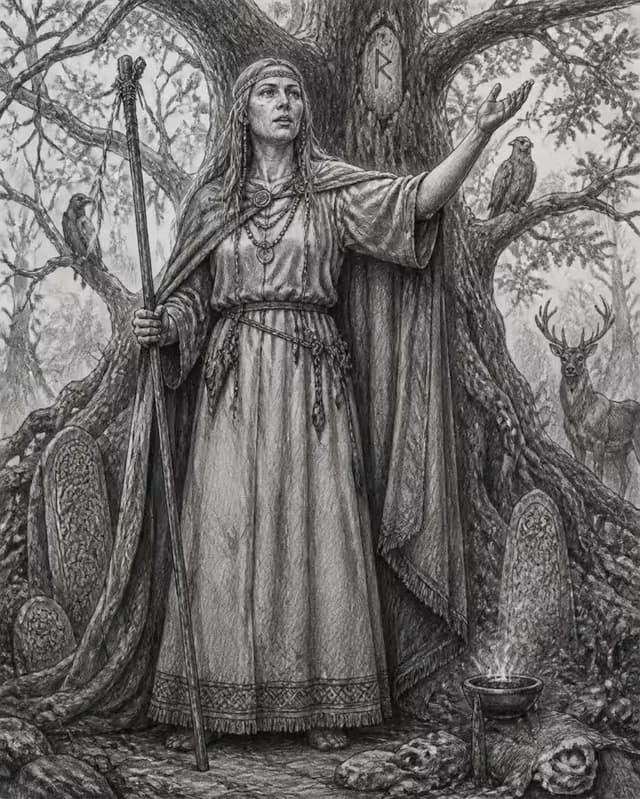
First and foremost I must emphasize that I call myself a witch, even though I «flirt» with shamanism and a little with the druids. And I am very interested in Slavic and Finnish directions in the witch world. Now I have pieced together a bit of Slavic «witchcraft» and share this with you – if you are interested.
Curses and incantations that are cast «with the wind» are considered the most powerful of all, and the results of these curses can be noticed almost immediately.
But this should be no surprise to those of us who have worked with the elements – for as a part of the natural element Air, it is assumed that the wind carries the words from the practicing «magician» directly to the deities, and that via the fastest possible route.
We do not have so very much power and force in ourselves, but if we get «Spirit» and the elements on our side, then things gain more momentum.
Even though the results of the incantation are expected to take shape quickly, this work is not of lasting value – The wind is willful, and everything can change when the wind changes direction or dies down completely.
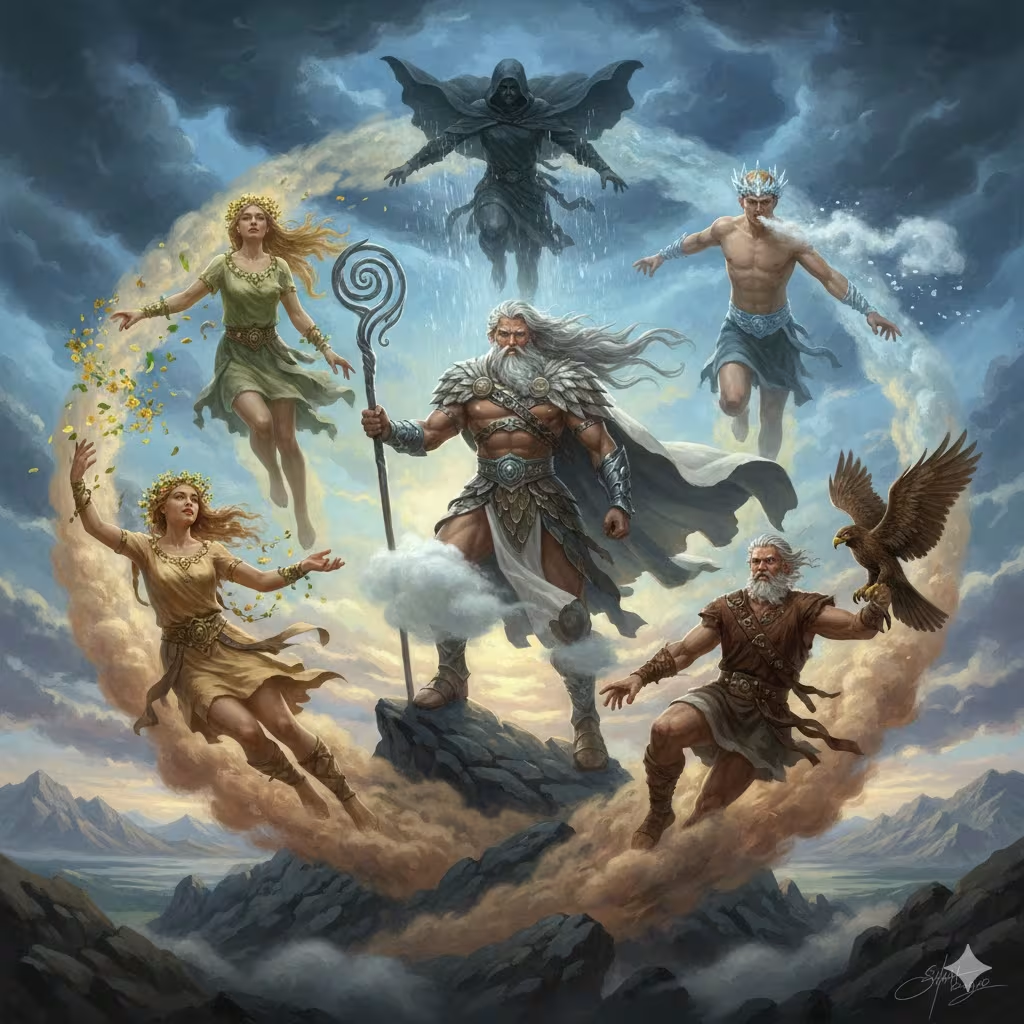
Four «brother-winds» are often mentioned in Slavic incantations.
What they are called varies from place to place, but the idea behind them remains the same – essentially they are winds from the four cardinal directions: East, South, West and North.
In incantations from the old days, three winds are sometimes mentioned instead of four. The North wind known as «Pozvizd» or «Pokhvist» was considered the most willful of the four winds and not always as friendly toward humans, and was therefore sometimes left out in magical contexts. And which wind am I most fond of? Of course the North wind. I have experienced that it gives the best results.
Wind and gusts were called upon when one was to amplify the effect of a spell, cast over water: «pour the water out in such a way that it will splash in all four directions and say:
«Four gusts – four brothers, carry my wish to all four directions».
It is actually quite tricky to manage the splashes, but practice makes perfect. Keep at it!
Stir the water and recite your wish four times before you pour the water out. The wind gives a fast result, the water gives a more lasting result.
If a magician had reason to believe that the work was not functioning as well as it should, one could bring in help from the Air element: «If the words cast over water do not seem to help, bring in some air …»
Light incense, hold it over the water, speak to the air. Quite simply, ask the air for help. Pour out the water again.
Working with the wind and the air usually included casting something «to the wind»: words, ash, seeds, water and so on, or a little lit incense: lacking the incense used by the Christian church, the Slavs used smoking bundles of thyme, juniper or burnt resin from the conifers, such as pine, spruce, fir or cedar.
Church incense is good, but personally I have had a better effect from homemade incense.
In Slavic protective magic they believe that the wind works well together with the fire to create a «burning wall» around the person and property to be protected – it helps the «fire» to spread, and the wind blows all negative energies back to those who sent them.
One can light candles, recite one's wish and blow gently on the flame to spread the fire and the wind's power. Or one could light a bonfire, recite prayers or one's wish by the fire and let the wind spread the word. Sometimes one placed herbs in the fire to give the magic extra power.
In cleansing rituals the wind could be used to cleanse stones, especially those stones associated with the element air – the stones could be hung in a fine net on a branch, so that the wind blew on them. The same method could be used to cleanse magical tools. One gathered these up in a net and let the wind take care of the cleaning.
I saw Russian witches put their Tarot cards in nets and hang them up on a branch when there was wind in the air. The ultimate was if there was a full moon that night too.
Within North Slavic ceremonial magic, Stribog, the god of the winds, is also considered to be a part of the air's element, and one should set aside a place on the east side of the altar that would be dedicated to this deity and to the element air.
Stribog could thus transform himself into air. One never knew what power was in the winds, and imagine if it was Stribog himself who was out and about? Or, was it only his power?
An empty cup or an incense vessel is usually placed on the altar or set out as an offering bowl to Stribog. Then one can put whatever one wants in the cup and place incense in the vessel, in Stribog's honor. I have no relationship with Stribog, so if I am not in his domains, I concentrate on Odin when I work with air. Ilmatar, if I should be in Finland.
Stribog's power can also be used indoors in the form of lit incense.
Fragrant smoke is used as an offering to Stribog in rituals for gain, to cleanse a person or a place, or to give power to a spell for protection.
In East Slavic energy work, the element air is viewed as the part of the human aura called «Spirit» (an energy field formed by a combination of body and soul), and the air is also responsible for the proper function of the three uppermost energy centers:
Ustye-Estuary (throat chakra), Chelo (brow chakra) and Rodnik (crown chakra).
Crystals used to work with these centers on the human body are usually light in color and translucent or clear: a labradorite or gray agate for the throat, light crystals, such as clear crystal quartz or pearl-colored moonstone for the brow, and pink, translucent crystals such as rose quartz for the crown.
The East Slavs mostly speak of three points and rarely say chakras. But, I have investigated this thoroughly and I believe that the points are the same as chakras?
Unlike the energy of fire, the element air is dry and cool: these feelings a practitioner must activate within themselves when the practitioner works with the spirit aura. That is, «the heart must be switched off» and «the brain must be switched on». Now there is little room for feelings and conjecture. Now the situation must be analyzed, very objectively and fairly.
I sometimes end up in awkward situations and on closer examination, I bear at least 50% of the blame myself. Then in any case I do not bring in any elements, then I must either clean up myself, or let the matter take its course – or let it die away. It is so important that we do not misuse the magic in the service of egoism! I believe you agree with me on this.
This part of the aura, that is, the three points, helps us achieve visible, material results from our projects. We think more clearly, we see our possibilities, and that is fertilizer for projects.
The spirit aura is the one that strengthens our actual willpower, and our will is activated while we concentrate and direct our will into the magic. What does one really want to achieve? What does one want to give growth to?
If one does not have contact with the three uppermost chakras/points, one cannot get any particular power sent into the magic, or get any particular result from one's work or one's effort.
In healing practice we draw with the «cold and dry» middle finger crosses or X-marks on the sick area to hasten the healing.
When we practice healing, the thought and the will should be in place.
I have seen witches draw runes and other magical signs on the sick area too. So this is probably according to the principle: «Do what works best for you and what feels most natural».
Many of the Slavic witches also say that walking between the trees in the forest on a windy day gives you extra cleansing and stimulation in the spirit's three points. In open landscapes the wind can become a little too strong and create a bit of aggression in the person, or stress.
The wind's power is necessary for personal development, such as increasing self-confidence and self-esteem, promoting a brighter outlook on life, knowing the magic of dreams (developing imagination), strengthening the power of the «voice», that is, the ability to convince or explain matters to other people, acquiring knowledge, developing intuition, giving growth to clairvoyance and magical powers, receiving inner strength to make realistic plans, and carrying out a vision and giving it a realistic, material form.
Amulets made for the element Air can help one with all these goals and with some other tasks, such as bringing luck out into the world or improving communication with other people and gaining allies/finding like-minded ones and making friends.
Amulets associated with the air element include various objects, among them: feathers, herbs in a small pouch and small figures of birds.
I have a little bat, made of a crystal, that I often carry with me. I have a friend who always has a chicken foot in her bag.
Translucent or transparent crystals (rose quartz, moonstone, clear quartz crystal and citrine are some examples), fragrant oils, incense and herbs (anything that can «smoke»), whistles and bells are the objects that can be used for various magical deeds that include the air's element.
For example, herb pillows, with herbs and crystals, can be made and activated for a good memory, improvement of self-confidence, reception of prophetic dreams and to make an important decision, ensure a good night's sleep, or quite simply for a good day.
Oils in perfume bottles can be charged to give the voice power, persuasive speech or to acquire knowledge.
One charges these bottles also by letting them hang in the wind.
A bell, a whistle (something that makes a sound that can be spread with the wind and conveys news from you and about you), or you can make a magical knot (nauz), dampen it with fragrant oils or smoke it with incense. This becomes an amulet of air for you when you need to achieve something related to other people, such as respect, honor, fame, good service, help from others, and so on.
Let us say you want to publish a book. Say the words with the wind and blow a whistle to spread the book news. If you have something to announce, do this with the wind and the whistle's help.
Have you had your reputation ruined by someone who wishes you ill? Use the wind to spread that you are innocent, you are only a victim. Then use fire and air to create a wall of protection – and use the whistle diligently in this difficult time.
Make yourself an amulet, charge it up – place it on an altar, use incense that smokes toward all four directions. It is enough that you take a bundle and lead it to the directions.
Alternatively, the amulet can be charged while it hangs outdoors where the wind blows on it. Let it hang overnight.
Always stand with your back to the wind and recite your words. The wind shall carry the words with it. Hold the amulet in your hand when you speak to the wind. Repeat this for three days, even if it becomes windless. Your words carry all the same. After three days, give your amulet to nature and thank Stribog or the wind for the help.
Moon phases do not affect wind rituals, but the time of day does.
It is recommended to work with the East wind in the morning, the South wind – around midday, the West wind – in the evening, and the most powerful formulas for the North wind are cast at midnight. When one works with one or the other wind, the practitioner must turn toward the direction the wind comes from (east for the East wind, south for the South wind, and so on).
You work with the wind when you have your face toward the wind direction, but you spread by having the wind at your back.
To establish contact with the wind, experienced witches advise you to whistle, play a flute of some kind or ring a bell. Another important detail is that your hair must be loose when you work with the wind – let the wind play with your hair while you ask it for help.
Spitting toward the wind is considered an insult to Stribog and his descendants, and many Slavic witches who work with the wind take the vow never to do such a thing.
There, that was that – may the winds bring you blessings :-)